





Why your mini split makes noise in a Washington winter

Step 1 of 3: Equipment

That noise is usually the outdoor unit running a defrost cycle. Washington winters stay damp and right around freezing a lot of the time, and that's the exact range where frost builds up fastest on the outdoor coil. The system reverses itself for a few minutes to melt that frost off, and you'll hear a whoosh, a hiss, or what sounds like running water while it does. A clicking or humming at startup is usually just the compressor or reversing valve switching modes. None of that is cause for alarm on its own. What's worth paying attention to is noise that doesn't stop once defrost ends, grinding or rattling that wasn't there before, or ice that builds back up faster than the unit can clear it. Since most homes here heat with electricity and lean on the mini split all winter, a unit that's struggling to defrost properly is working harder than it should, and that's worth having a contractor look at before it gets worse.

A smiling woman with dark shoulder-length hair in a cream V-neck sweater sits at a marble counter with a glass of red wine, with a kitchen and softly lit living room behind her.
A woman in a dark green sweater laughs while seated at a marble kitchen island with a glass of red wine, with open shelving, cabinets and a living room visible behind her.
A woman with long dark hair in a cream knit sweater laughs while looking off to the side, seated at a counter with a glass of red wine, in a dimly lit living room with a sofa, lamp, framed pictures and houseplant behind her.
A smiling woman with long dark hair in a beige sweater sits at a marble kitchen counter with a glass of red wine, with a dimly lit living room behind her.

Is this noise normal or is something wrong

A defrost cycle sounds like a whoosh or a hiss, lasts a few minutes, and the outdoor unit might look like it's steaming as the frost melts off. That's fine. What's not fine is a clicking or buzzing that starts and stops on its own, a grinding sound from the outdoor fan, or the indoor head running but blowing cold air into a cold room. Those point to a stuck reversing valve, a fan motor working harder than it should, or ice that built up faster than the system can clear it. Left alone through a Washington winter, that ice can back up against the coil and the unit will keep drawing power to fight a problem it can't fix on its own, which shows up as a heating bill that climbs while the house stays cold.

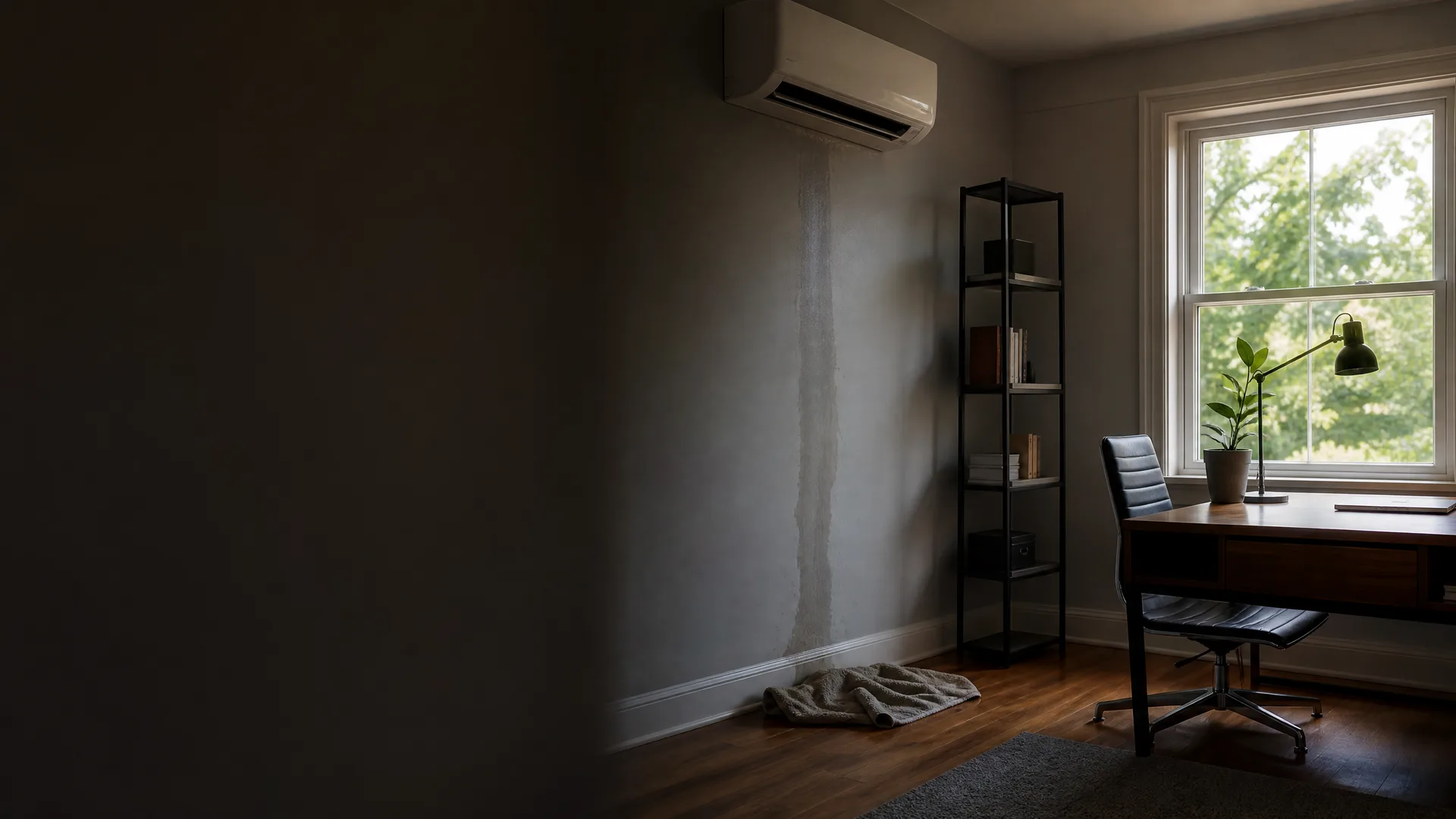
A dim room with a wall-mounted mini-split air conditioner above a water stain running down the gray wall to a towel on the wood floor, with a black shelving unit, a desk with a lamp and potted plant by a window, and an office chair at right.

The office is the one room you use every evening once the house goes quiet. This afternoon the wall under the indoor unit has a wet streak running down it, dark against the paint, and you've already put a towel on the floor to catch what's dripping. It's winter, the kind of damp cold Washington sits in for weeks at a time, and the unit's been running the whole time you've been at your desk. No clicking, no buzzing, just that streak getting longer while you work. You stop to blot the towel again before the water reaches the baseboard, and you're still not sure if it's coming from inside the unit or down the line from somewhere outside.

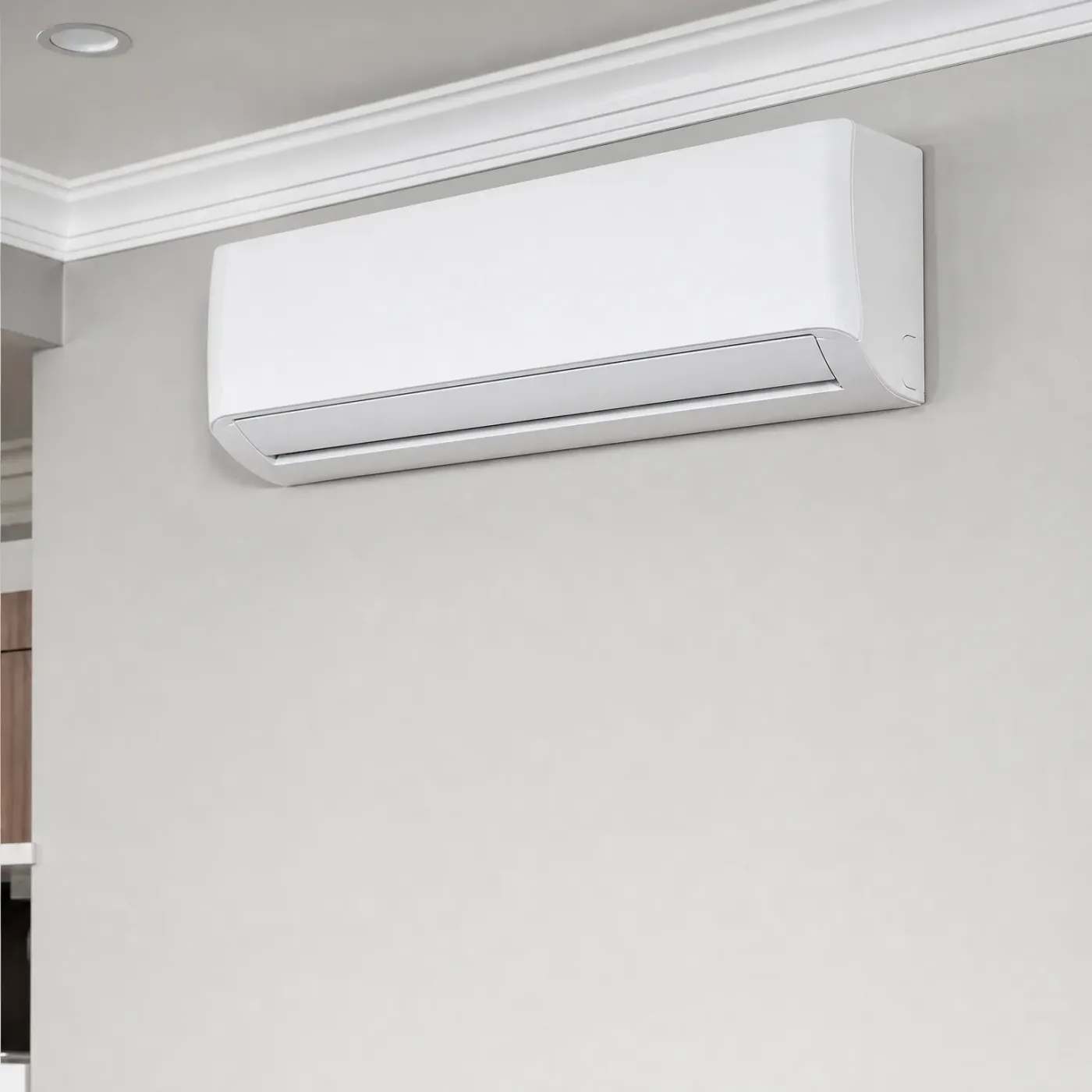
A white wall-mounted mini-split air conditioner installed high on a light gray interior wall below a white crown molding and ceiling with a recessed light.
A mini split cycling through defrost normally, running quiet aside from that periodic whoosh.
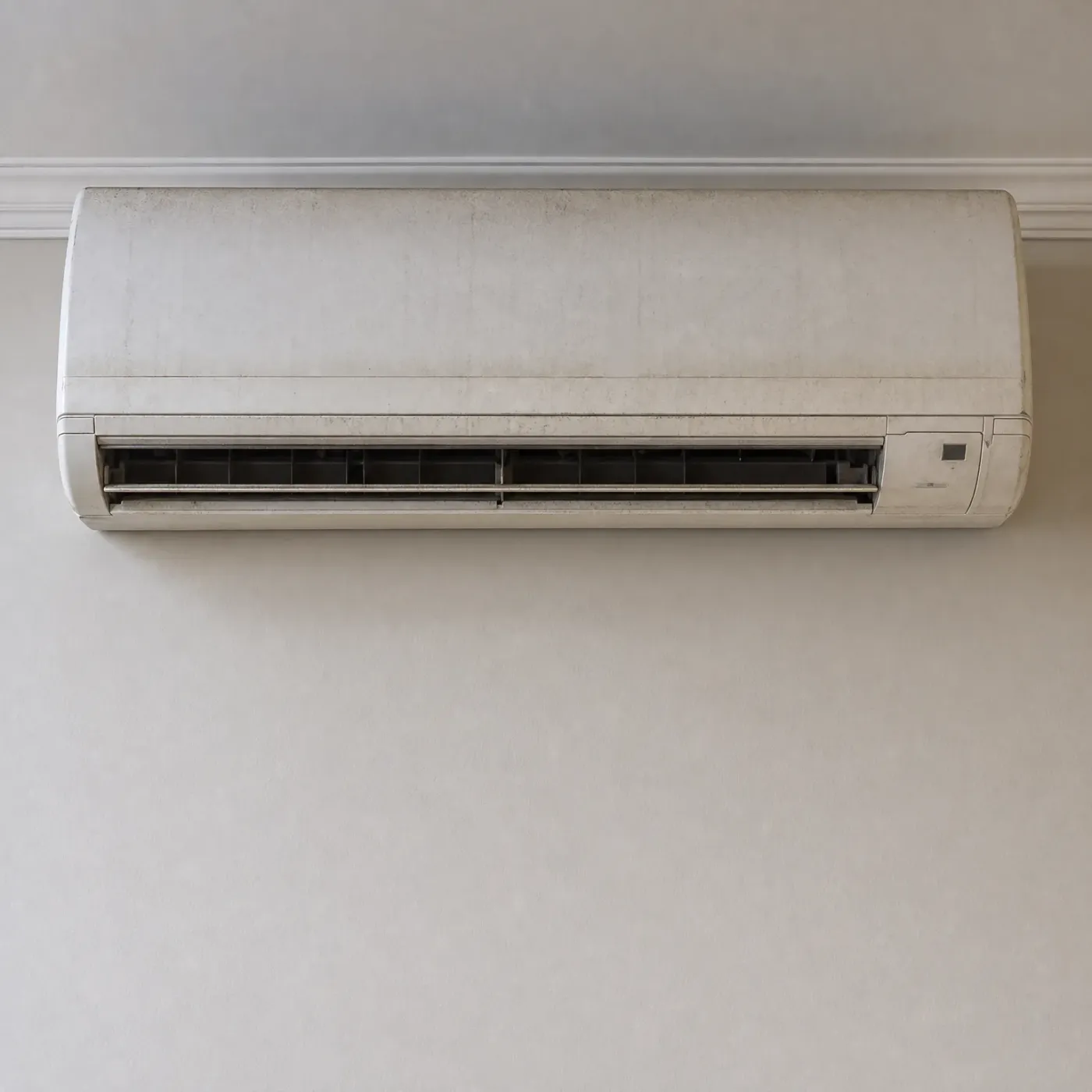
A dusty, discolored white wall-mounted mini-split air conditioner unit installed on a plain beige interior wall below a molding strip.
Dust caked into the casing and a hum that doesn't stop are signs it needs a look before spring.

What's happening during defrost

  • The outdoor unit's reversing valve flips, sending hot gas through the outdoor coil instead of the indoor one.
  • That hot gas melts the frost built up on the coil, and the fan slows down or stops while it works.
  • A sensor on the outdoor coil tracks its temperature and tells the system when enough frost has built up to need a defrost.
  • Once the coil warms past a set point, the valve flips back and the unit returns to heating your room.
  • The compressor doesn't shut off during this, so you'll hear it change pitch rather than go silent.
  • Cold, damp air holds more moisture to freeze onto the coil, which is why this cycle runs more often on raw days than dry ones.

Your mini split's outdoor unit has a coil that acts like a radiator, pulling heat from the outside air even when it's cold out. In damp weather that coil picks up frost the same way a car windshield does, and once enough builds up, the unit can't pull heat through it anymore. So the system runs a small cycle to clear it. A valve inside the outdoor unit reverses the flow of refrigerant, sending hot gas out to the coil instead of into your house. That gas melts the frost off in a few minutes. The outdoor fan slows or stops during this part, since it doesn't need to pull in cold air while the coil is being warmed. A sensor mounted on the coil is what tells the system when this needs to happen. It isn't on a timer. It's reading the coil's actual temperature, and once enough frost has formed to drop that reading below a set point, defrost kicks in on its own. The compressor keeps running the whole time, just doing a different job, which is why you hear it change sound instead of cutting out. On a raw, wet day you'll hear this more often than on a cold, dry one, because wet air has more moisture available to freeze onto the coil in the first place. None of this is the unit struggling. It's the system clearing itself so it can keep heating your house.

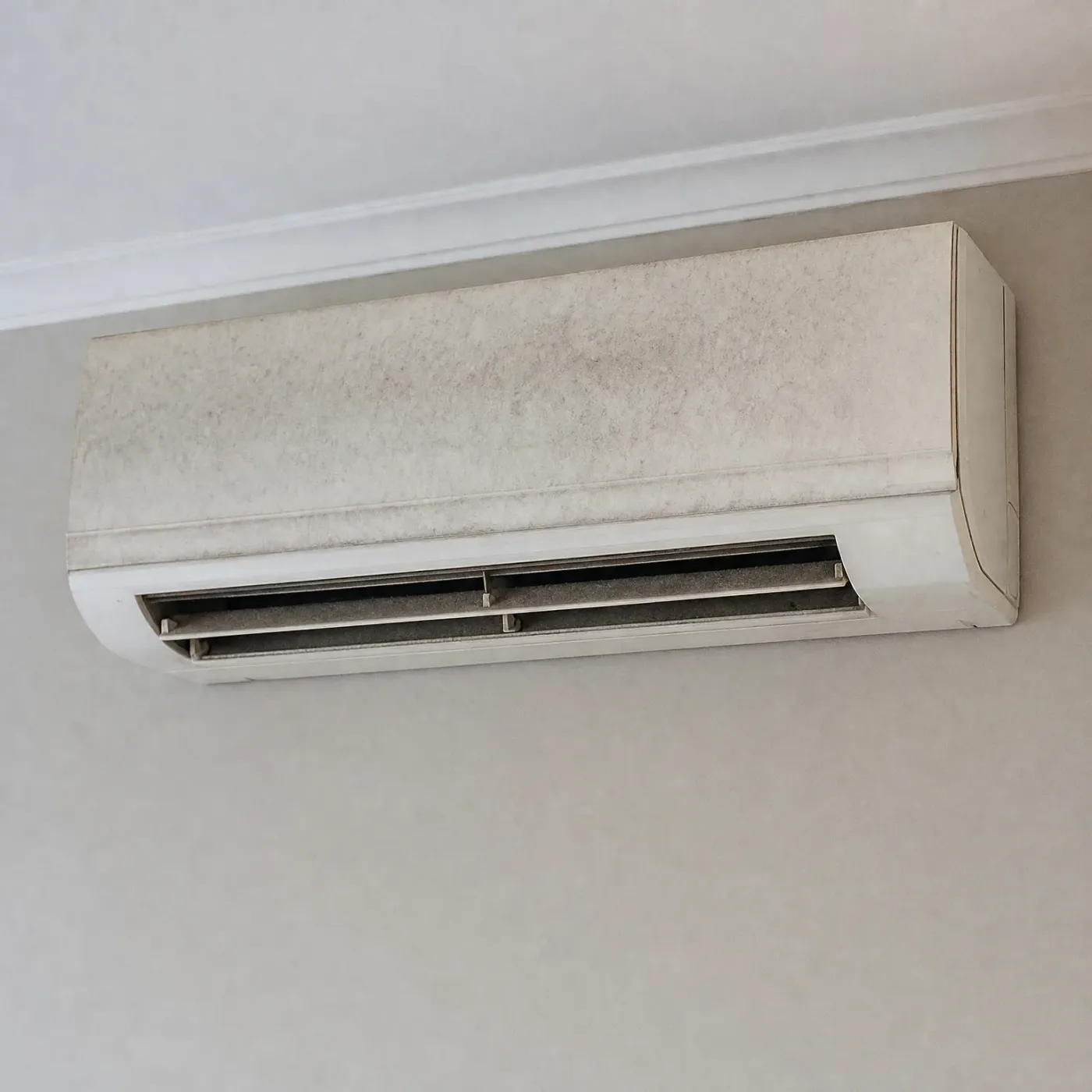
A dusty, discolored white wall-mounted mini-split air conditioner unit installed high on a plain interior wall below a white ceiling molding.
Before you get your mini split repair
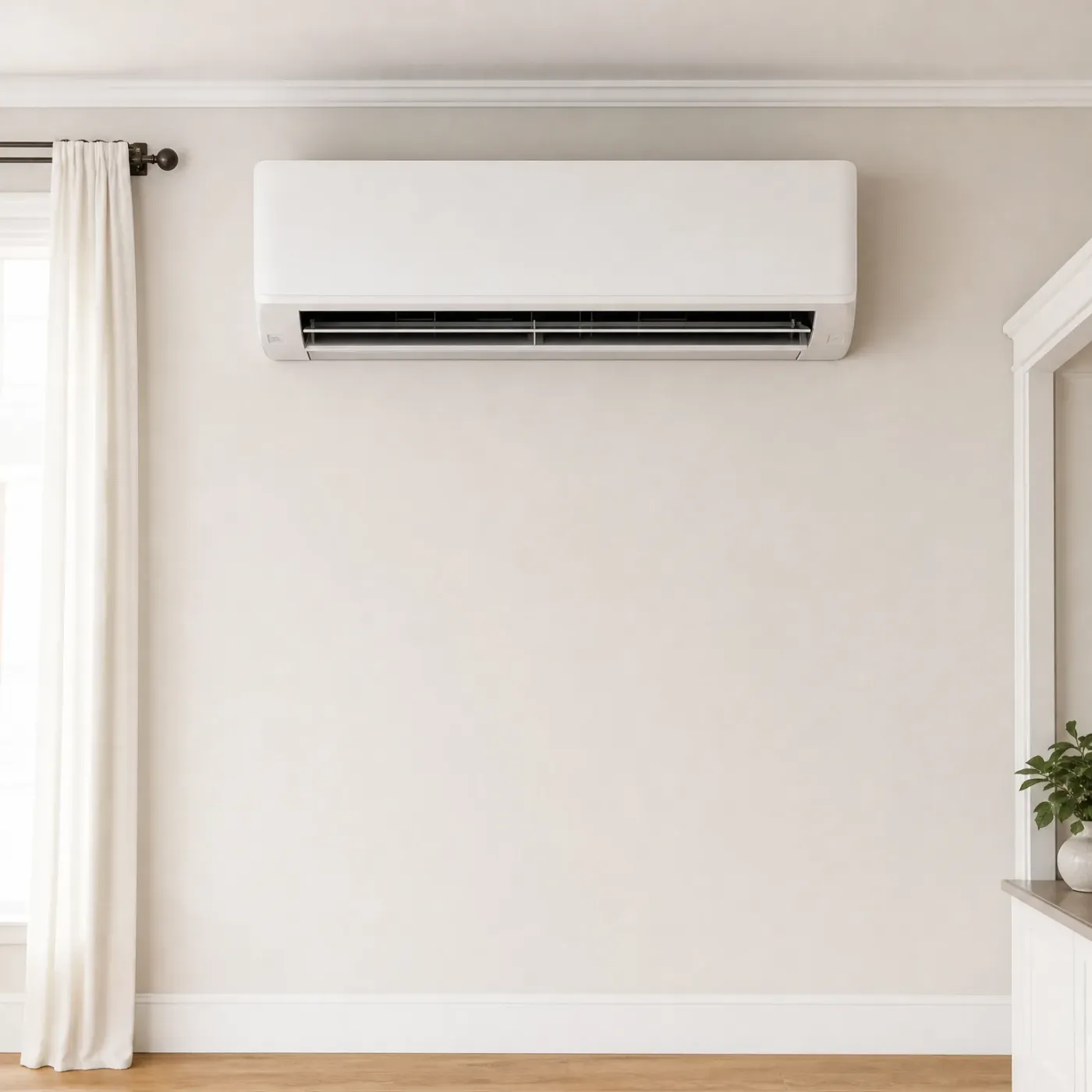
A white wall-mounted mini-split air conditioner on a beige interior wall, with a cream curtain and window at left, a potted plant on a ledge at right, and a wood floor below.
After you get your mini split repair

A pro who works on mini splits

Skip searching for a mini split pro and answer a few questions instead.

There's no charge for the request.

Why the outdoor unit works harder here

Electric heat means your mini split is the one running the whole time it's cold out, not backing up a furnace. In a lot of Washington homes it's doing most of the heating load from October through spring. That's more hours of compressor time and more defrost cycles than a system that only kicks on now and then. More run time means more chances to notice a noise that's new, and more wear on the parts that make it.


What a healthy cycle sounds like

A defrost cycle has a rhythm to it. The compressor and fan slow down, there's a whoosh or hiss as the valve reverses, and it runs a few minutes before switching back. You'll hear it start and you'll hear it end. A unit with a real problem doesn't follow that pattern. It clicks on and off at odd times, buzzes steadily, or runs defrost far more often than it used to. If the pattern feels different than it did last winter, that's worth paying attention to.

A smiling bearded man in a navy sweater sits at a candlelit dinner table with a glass of red wine, a bowl of salad, and plates of food in the foreground.
A woman with dark hair in a bun reclines on a sofa with her eyes closed, wrapped in a cream fleece blanket, a closed blue hardcover book resting in front of her, with a lit lamp and a vase of dried flowers in the background.

A defrost cycle runs the same way whether the unit was installed last year or long before you moved in, melting frost off the coil so it can keep pulling heat from outside air.

A unit straining to defrost night after night all winter is a different story. The noise is still coming from the same place, but something in that cycle isn't finishing clean anymore.

Power costs 13.17 cents per kilowatt-hour statewide

At 13.17 cents a kilowatt-hour, running your mini split hard on a cold night doesn't hit your bill the way it would in a lot of other states. A noisy defrost cycle is worth getting looked at because something's wrong, not because of what it's costing you to run.

EIA-861 2025 statewide residential average

  1. The thermostat calls for defrost once the outdoor coil gets cold enough.

  2. The reversing valve switches and sends hot refrigerant gas outside.

  3. The outdoor fan slows or stops so heat stays on the coil.

  4. Hot gas melts the frost while the indoor unit blows cooler air briefly.

Is That Sound Normal

Normal defrost noise

  • The outdoor unit cycles into defrost on its own, usually sounding like a whoosh or a low hiss for a few minutes at a time.
  • Steam or light fog coming off the outdoor coil during that cycle is just melted frost, not smoke.
  • The sound stops on its own once the coil clears and the system switches back to heating.
  • It happens more often on damp nights right around freezing, since that's when frost builds fastest.
  • The indoor unit may pause blowing warm air for a minute while the outdoor unit works through it.

Noise that needs a look

  • A clicking or buzzing that starts up and doesn't stop isn't part of a normal defrost cycle.
  • A hum that runs continuously, not in short bursts, points to a motor or electrical issue rather than frost.
  • Dust caked into the outdoor casing can throw the fan off balance and add noise that won't go away by itself.
  • A wet streak on the wall under the indoor unit alongside the noise usually means a drain line problem, not defrost.
  • Noise that shows up every night all winter, rather than now and then, means the unit is straining more than it should.
Single-story house with tan horizontal siding and a dark shingled hip roof, fronted by a patchy green and brown lawn and a concrete walkway leading to the covered entry.

The weather that matters here isn't winter, it's summer. Dew points average 53°F across June, July and August, according to NOAA climate data for Washington, which is low enough that the air never gets heavy. That keeps your mini split's summer workload light. Winter is a different job entirely, and it's the one driving the noise you're hearing now. The unit isn't straining against humidity in the cold months, it's cycling through defrost because of damp air sitting right near freezing. Low summer moisture doesn't offset that.

NASA POWER T2MDEW county cells weighted by homes

A woman in a cream cardigan and jeans stands with one hand raised facing an open front door of a gray horizontal-siding house, with a black lantern wall light, a potted shrub with yellow flowers, and a stone-faced porch column.

A noisy defrost cycle on its own is nothing to worry about

A whoosh or a hiss every so often through the night is your mini split doing exactly what it's built to do. Clicking, buzzing, or a hum that won't quit is the sound of something wearing down, and that's worth having checked before it leaves you without heat on a cold night. The difference between those two is the whole answer this page came to give you.

If what you're hearing sounds like the second kind, the next step isn't tracking down a repair company yourself, calling a few, and explaining the same noise over and over while you wait on quotes. It's getting matched with a contractor who handles mini splits in your area, and having them reach out to you directly. You've already spent enough evenings listening to the unit. Let someone who knows what to listen for take it from here.

A living room corner with a light beige sofa holding a textured taupe cushion, a large ceramic vase of olive branches by a window, a framed neutral artwork on the wall, and a dark bowl with stacked books in the foreground.
The dark gabled metal roof and upper wall of a house with one window, framed by conifer trees, with mist-covered forested mountains and overcast sky behind.

Get your mini split to the right pro

Get a mini split pro

You only hire the pro if you want to.

You don't have to pin down what's wrong before asking for help. Skip the searching, the calling around, and explaining the noise twice over. One request gets you matched with a contractor who already knows what a straining mini split sounds like in a Washington winter, and they'll reach out to you directly.