
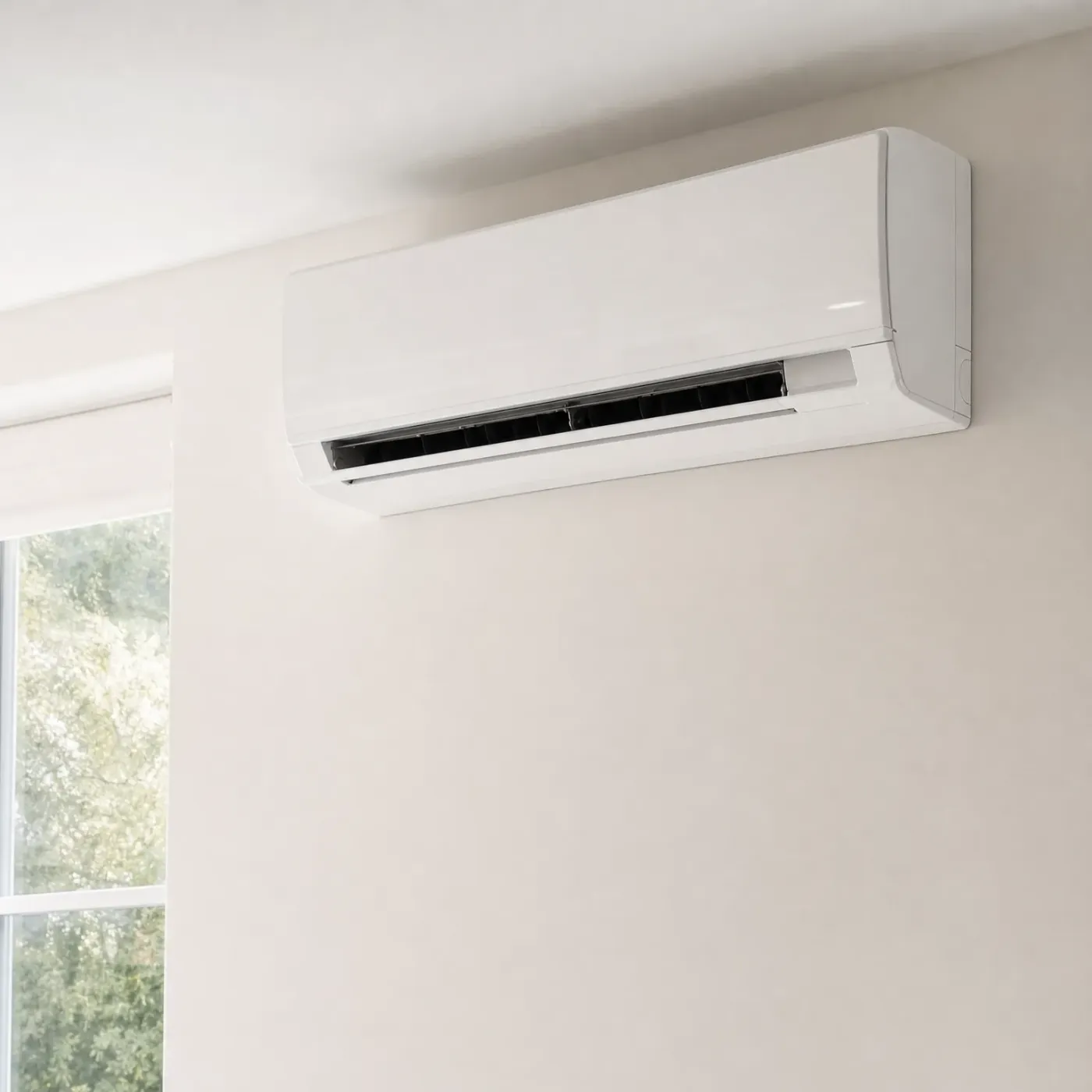
Draining the way it should
Condensate forms inside the unit and runs out through the drain line without you noticing. The wall stays dry below it. Air comes out warm and steady, and nothing pools on the floor or the sill underneath.
That water on the floor under your indoor unit is condensate that isn't draining where it should. In winter, your mini split spends a lot of its time running in heat mode, pulling warmth out of the cold outdoor air and moving it inside. The outdoor unit's coil runs cold enough that moisture in the air condenses on it, and if that condensate line is clogged, frozen, or sloped wrong, the water backs up instead of running outside. Cold temperatures make it worse, because any water sitting in the line or the drain pan can freeze, block the path completely, then thaw and overflow. It can also mean the line froze outright and cracked, or the unit has iced over and is dripping as it defrosts. Either way, water where it shouldn't be means something in the drainage or the defrost cycle isn't working right, and it's worth having someone look before it damages your floor or wall.
Condensate forms inside the unit and runs out through the drain line without you noticing. The wall stays dry below it. Air comes out warm and steady, and nothing pools on the floor or the sill underneath.
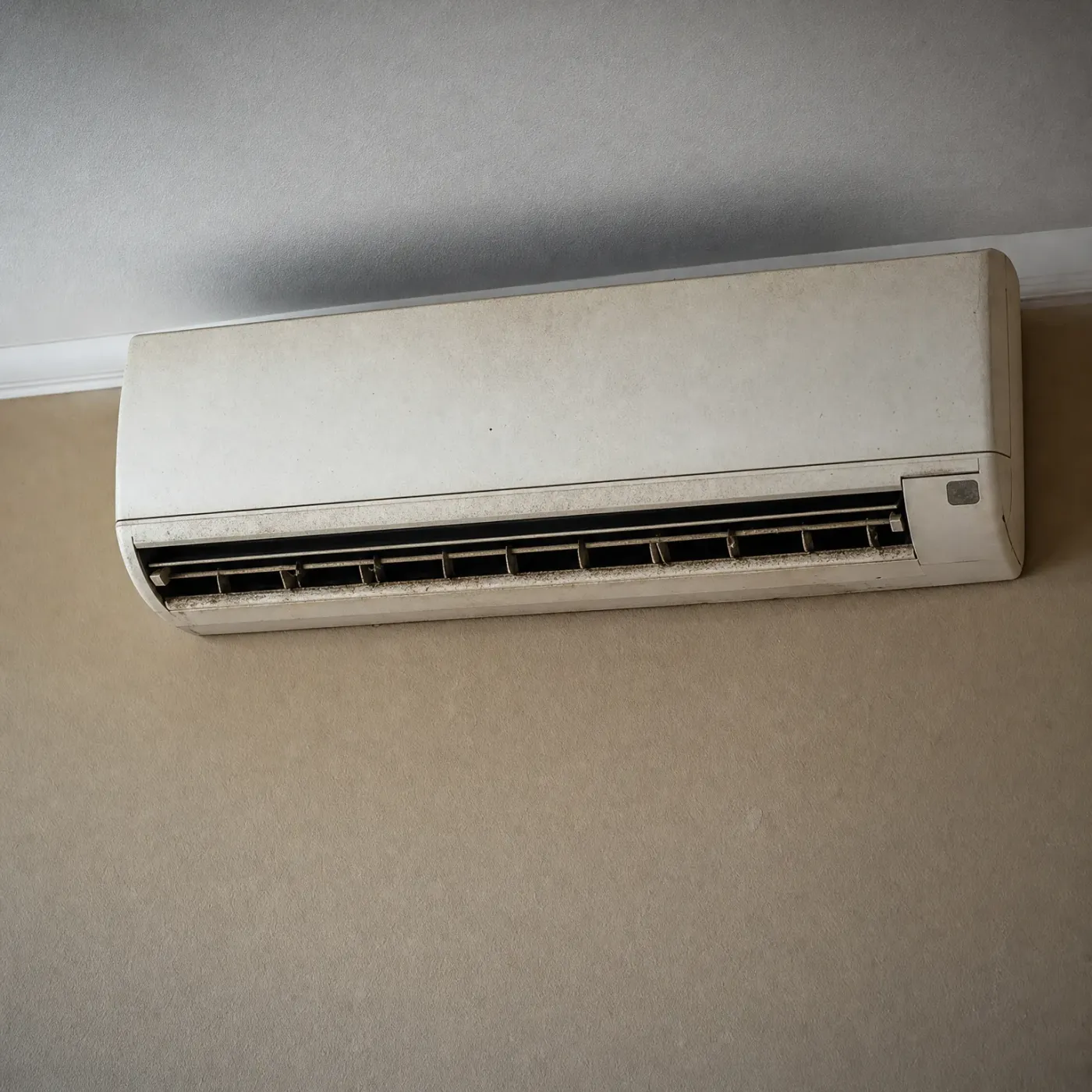
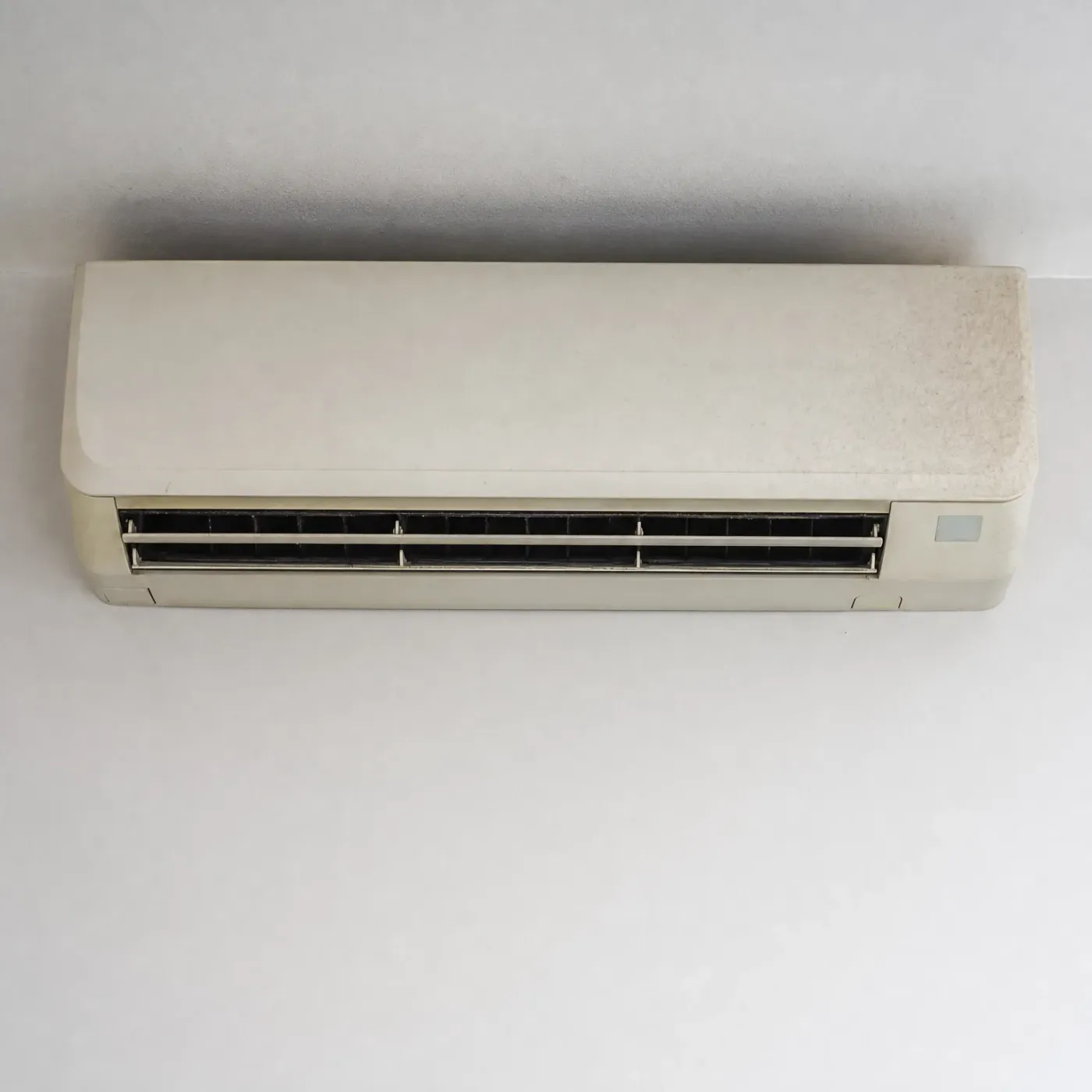
Dust and grime around the vents often mean the drain line or the pan behind them is clogged, or ice has built up on the outdoor coil and started melting into water that has nowhere to go. Water shows up on the wall or floor below the indoor unit, and it keeps coming back until whatever is blocking it gets cleared.




Your indoor unit still has a cold coil in winter, even while it's blowing warm air into the room. The reversing happens outside, not at the coil you can see. Room air passes over that coil, gives up its moisture, and the water runs down into a pan, then out through a drain line pitched toward the outside. Under normal conditions you'd never notice any of this. The line is built with a slope for a reason, and as long as water keeps moving along it, it clears the pan as fast as the coil makes it. Problems start when something interrupts that path. A sag or kink in the line holds a pocket of water instead of letting it run out, and that pocket backs up. The line also narrows over time from the same algae and dust that build up in summer, so a clog can show up in January with no connection to the cold at all. Outside, the last stretch of line runs near the exterior wall, and once temperatures drop enough, that short section can freeze solid and seal itself shut.
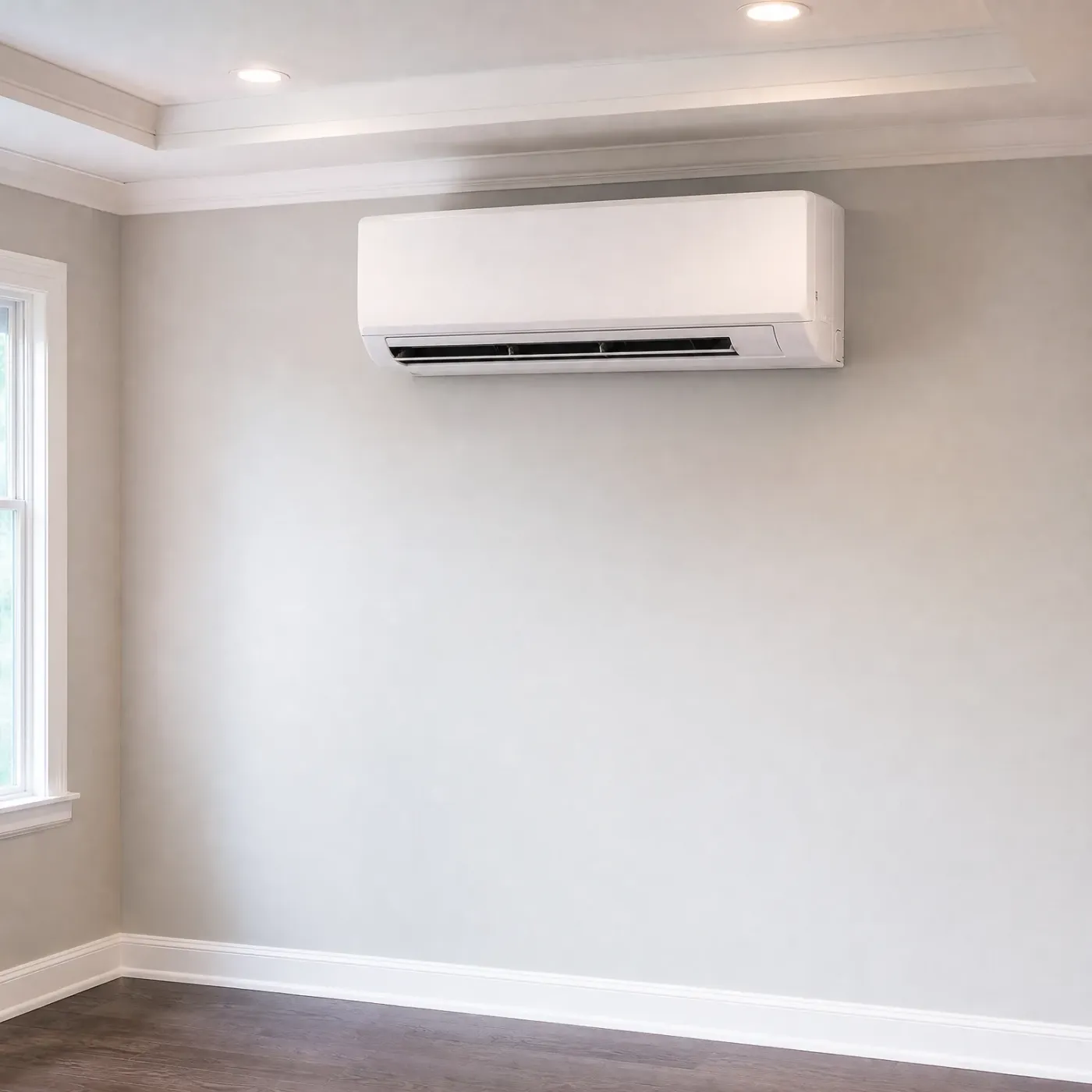
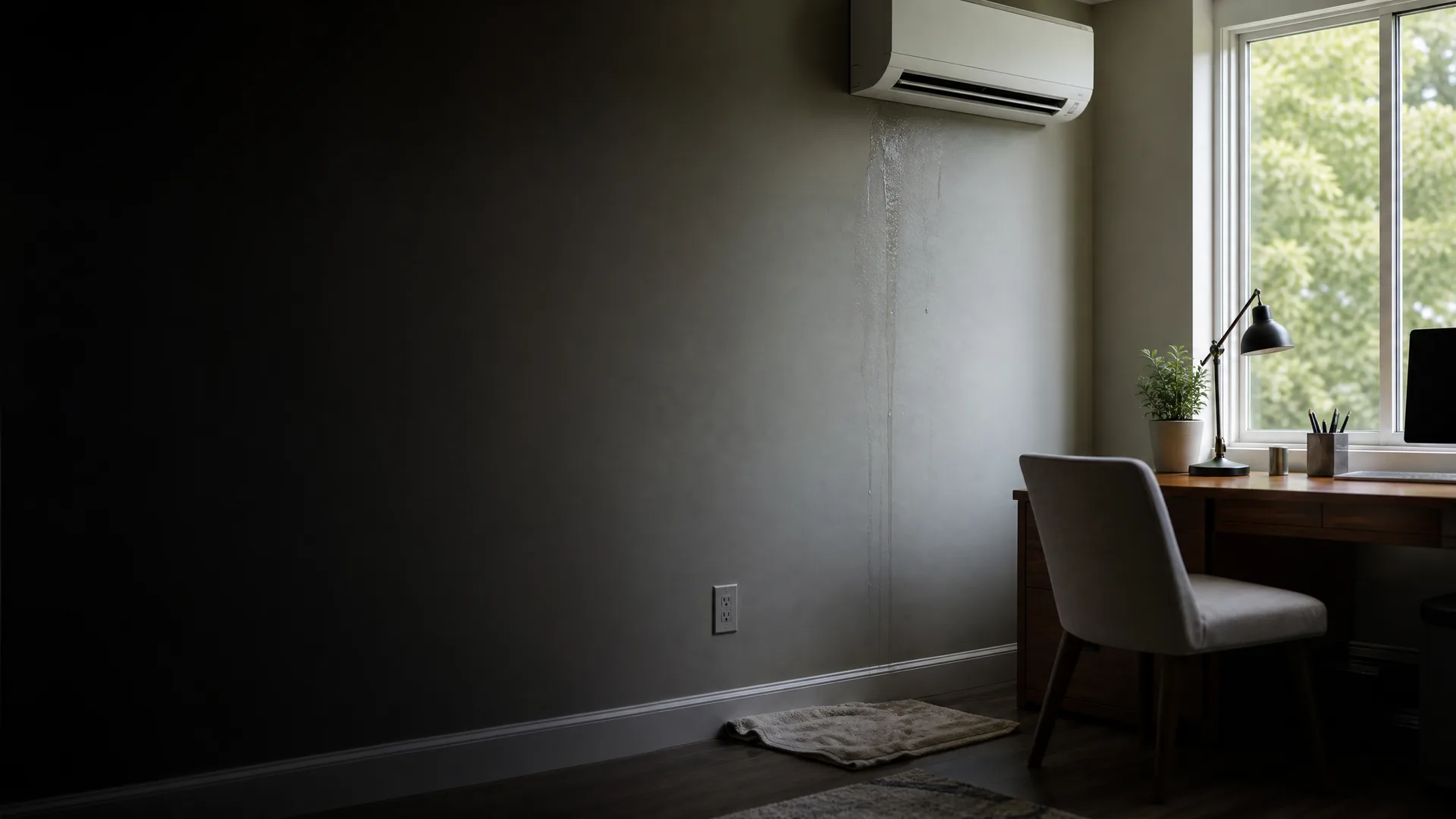
It's late afternoon and the light through the office window has gone flat and gray, the kind of day that never fully got warm. You're at your desk when you notice the carpet feels damp under your sock. You look up and see it: a dark streak running down the wall below the mini split, following the line of the unit down to the baseboard. You go get a towel from the hall closet and press it against the wall, then lay it along the floor. The unit is still blowing warm air, same as always. Nothing sounds wrong. You stand there for a minute looking at the wet patch, wondering how long it's been running like this and whether it's something you can find in time or something that needs a tech who knows this system to look at before the wall underneath takes real damage.
A leak that keeps coming back usually means the drain line is pitched wrong, cracked, or clogged with algae, and that's not something to chase every few weeks on your own. It takes someone who opens up mini splits all year in Washington and knows which part of the line tends to clog first, whether the pan needs a closer look, or whether the real problem is ice building up on the outdoor coil during a cold snap. The contractor who takes this request is local and licensed, and it's just the one, so you're not sorting through five quotes while water keeps dripping onto your floor. Send the request and let someone who does this work every winter figure out why your unit is leaking and what it takes to stop it for good.
The outdoor unit has its own drain, and in winter that one carries defrost water. When frost builds up on the coil, the system briefly reverses to melt it off, and that melted frost has to leave through the base pan drain. If that drain is blocked or the pan heater isn't working, water backs up, freezes, and can push ice into parts of the unit that aren't built to hold it.
The drain line relies on gravity alone to move water out. There's no pump pushing it along in most setups, just a slope that has to run downhill the whole way to the outside termination. If even a short stretch of that line sags or runs flat, water sits there instead of draining, and in cold weather that standing water is what freezes first and blocks everything behind it.
At 13.17 cents a kilowatt-hour, running your mini split in heat mode all winter is cheap compared to other ways of heating a Washington home. That's worth knowing before you let a leak sit. A clogged drain line won't cost you much to ignore, but it can still warp a floor or stain a wall while you wait.
EIA-861 2025 statewide residential average
Water under your indoor unit in winter comes down to drainage, almost every time. Your mini split is running in heat mode, but the indoor coil still collects moisture from the room air, and that water needs a clear path out through the drain line. When it finds one, you never see it. When it doesn't, it shows up on the floor or the wall below the unit. The outdoor unit adds a second path to watch. As frost builds on its coil, the system reverses briefly to melt it off, and that meltwater leaves through its own base pan drain. A problem at either end can land as the same puddle inside, which is why checking the indoor coil alone sometimes misses the real cause. A dry wall and warm, steady air mean both drains are clear and doing what they're built to do. Dust collecting on top of the unit or a dark residue around the vents is worth a second look, since it often points to a line or filter that needs attention before it turns into a leak. If the water keeps coming back after you've wiped it up, that's not something to keep managing on your own. A recurring leak usually means the drain line is pitched wrong, cracked, or blocked in a way that needs to be traced and corrected at the source, not just cleared for the moment. Someone who works on these systems through a Washington winter will know where that line usually fails and what it takes to fix it for good.


The drain line is the usual cause, and it's not something that fixes itself. Left alone, a slow clog turns into a steady drip through your ceiling or wall. A Washington contractor who services mini splits all winter has seen this exact leak before and knows whether it's the pitch, a clog, or the outdoor unit's defrost drain backing up. You'll be matched with one licensed local contractor for your situation, not a list of companies competing for your call.
Your request stays with one local pro.
You're not committing to anything by asking.