Defrost doing its job
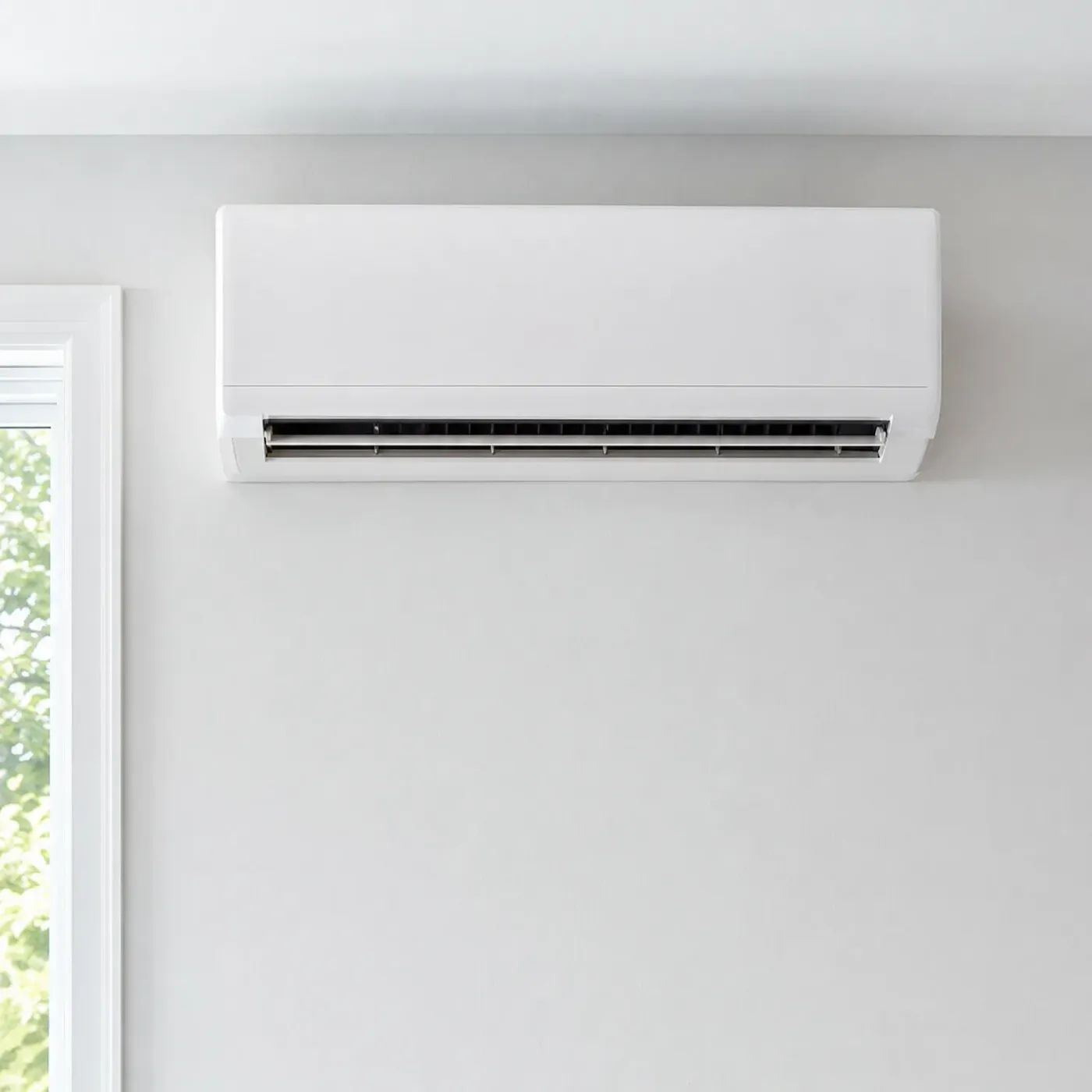
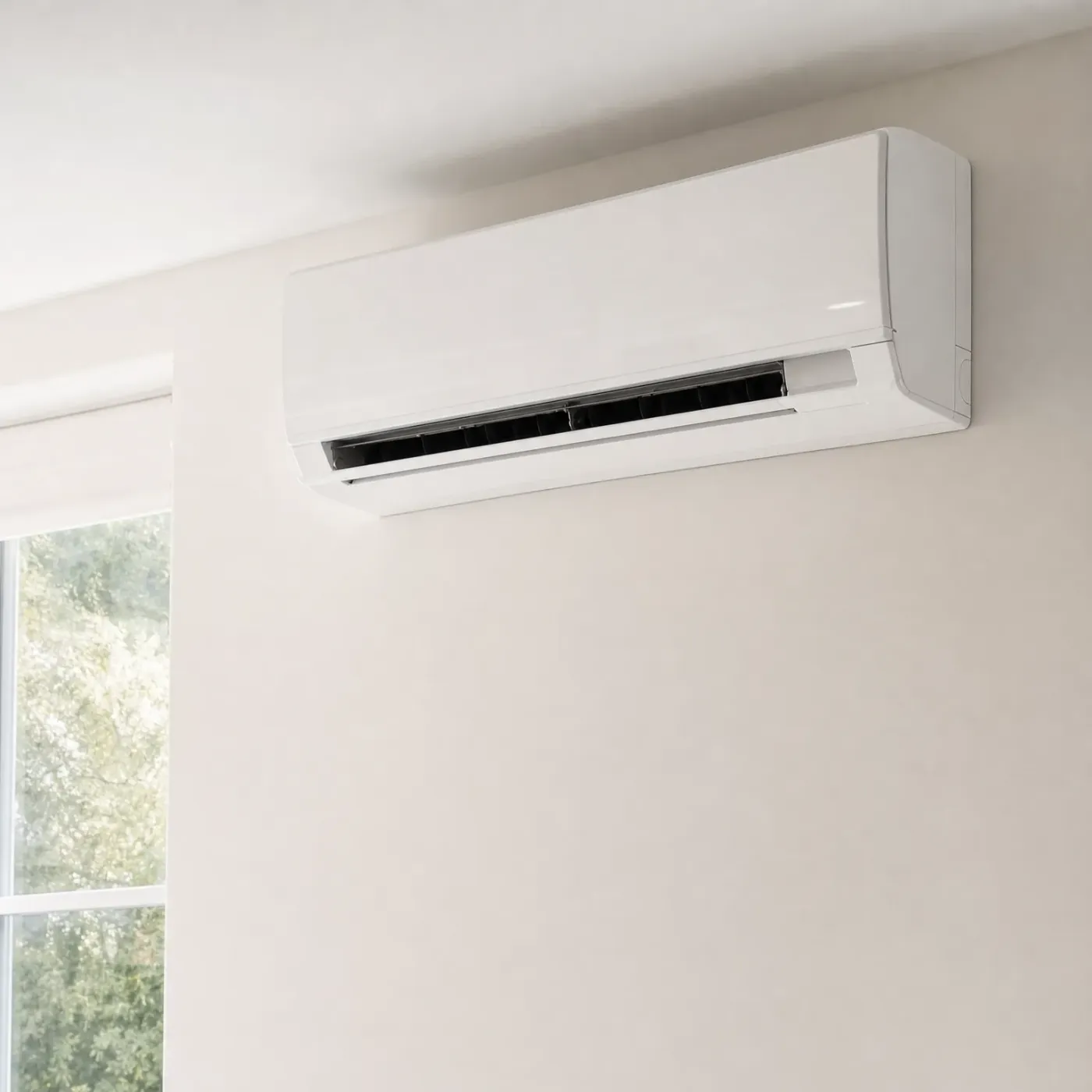
The outdoor unit cycles into defrost, clears the coil, and goes back to heating. Indoors you'd barely notice. The cabinet stays clean and the panel sits flush, because the system isn't working harder than it needs to.
 Hand it off
After you send the request, you're done searching.
Your mini split goes into defrost when it needs to clear ice off the outdoor coil. In the middle of winter you might see the indoor fan stop, hear a change in sound from the outdoor unit, or notice what looks like steam coming off it. That's normal. The system reverses itself for a few minutes, melts the frost, and goes back to heating. It's not broken just because it did this.
What's not normal is when it happens too often, runs too long, or the unit never comes back to heating after. On a cold, damp morning that's a sign something's off, whether that's a sensor telling the system to defrost when it doesn't need to, a fan that's not pulling enough air across the coil, or a refrigerant charge that's low. Since most homes here heat with electricity and a mini split that's stuck cycling through defrost is running up cost without putting out heat, that's worth getting looked at before it turns into a system that won't keep the house warm at all.
This is worth putting in front of someone who works on mini splits all winter, because they'll know right away whether what you're seeing is the unit doing its job or the unit struggling. You'll be connected with one contractor, licensed and local, not a handful of companies competing for your call. Once you send the request, you're done chasing it down. Finding someone to look at the system is off your plate.
From there it's in the contractor's hands to figure out what your unit is actually doing and get it back to heating the way it should.
You've noticed the indoor unit blowing cool or lukewarm air for a few minutes, sometimes with the fan running slower than usual, before it switches back to heating. If this is happening on a cold day, you're probably wondering if something's wrong with the system, especially since it's supposed to be keeping the house warm.
During defrost, the system briefly reverses itself and sends heat outside to melt the ice on the outdoor coil, instead of pulling heat in for your rooms. That's why the air coming from the indoor unit feels cool for those few minutes. It's not blowing cold air on purpose, and it's not a sign the heat strip or compressor is struggling. Once the coil is clear, the unit switches back to heating and the warm air returns. With Washington winters bringing damp cold and frequent frost on the coil, this cycle can happen more than once in a day. If the cool air lasts much longer than a few minutes, or the outdoor unit stays iced over after defrost ends, that's worth having someone look at.
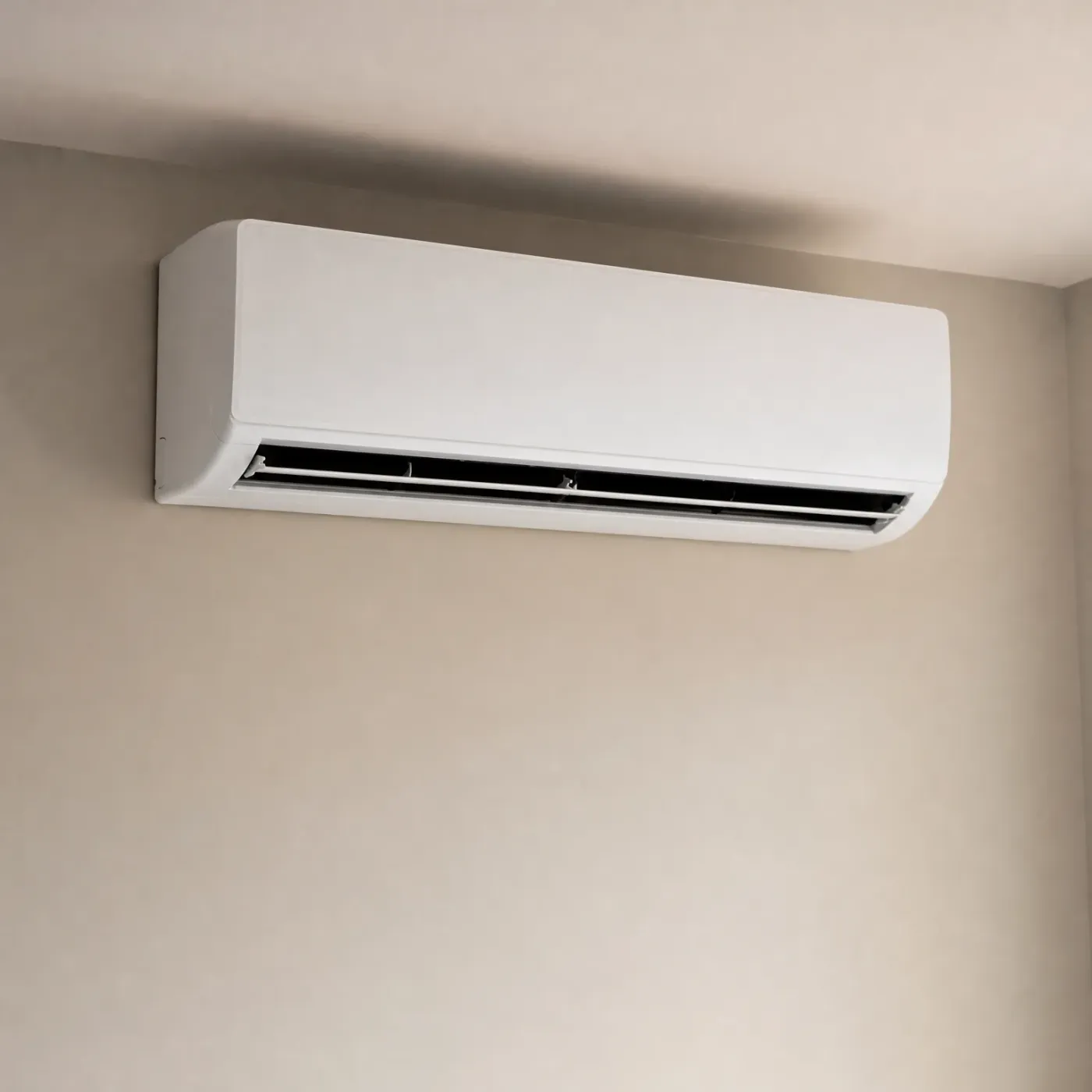
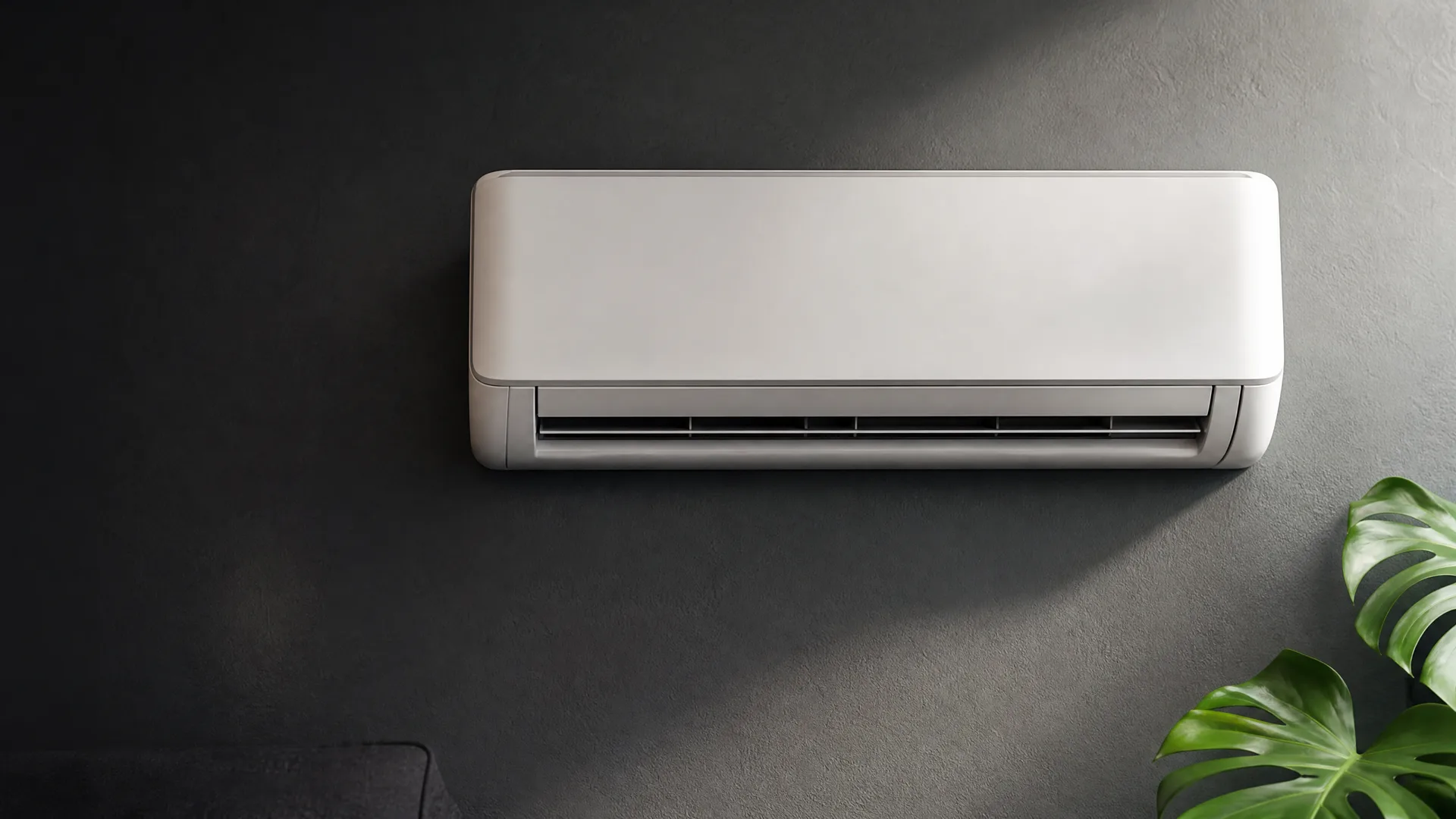
The outdoor unit cycles into defrost, clears the coil, and goes back to heating. Indoors you'd barely notice. The cabinet stays clean and the panel sits flush, because the system isn't working harder than it needs to.
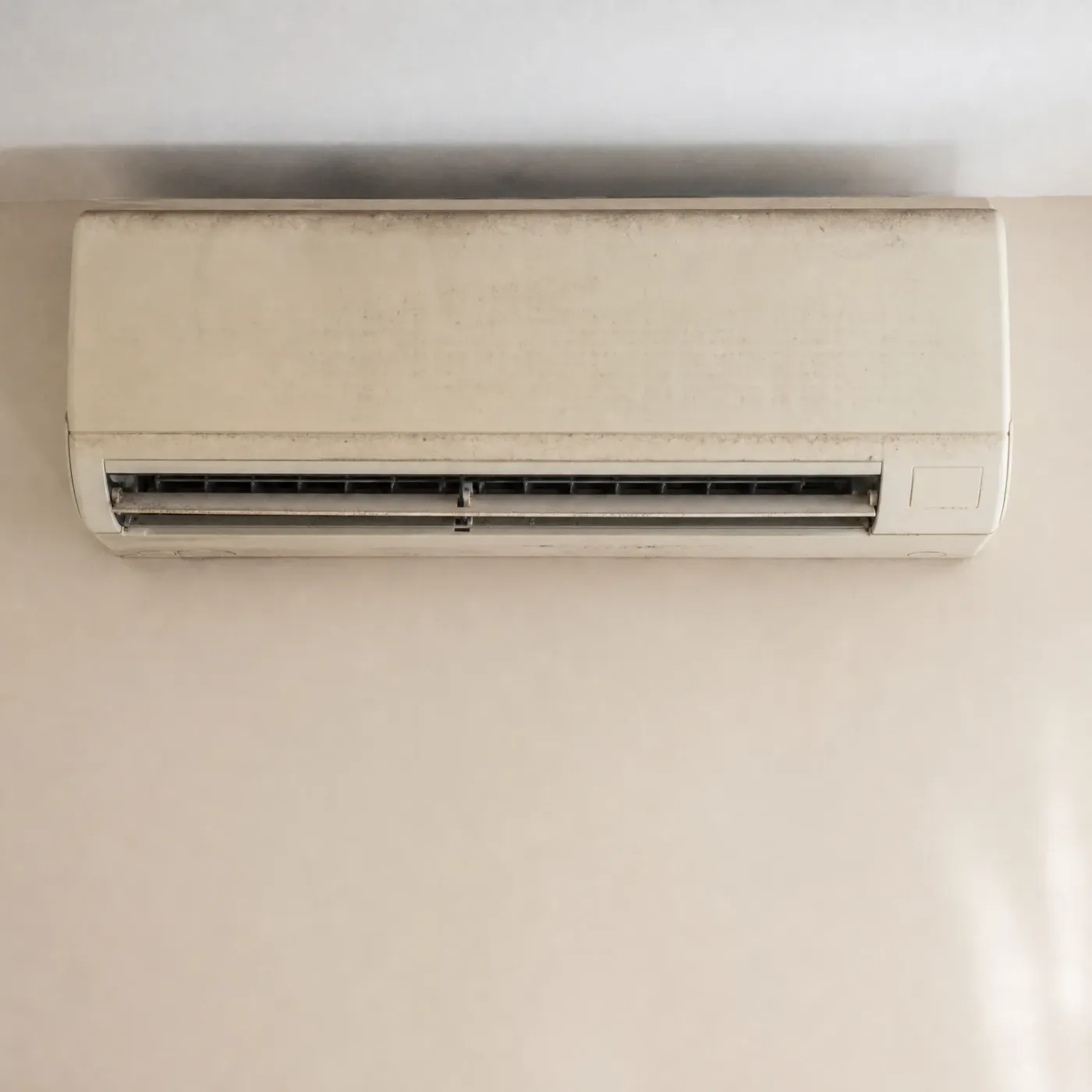
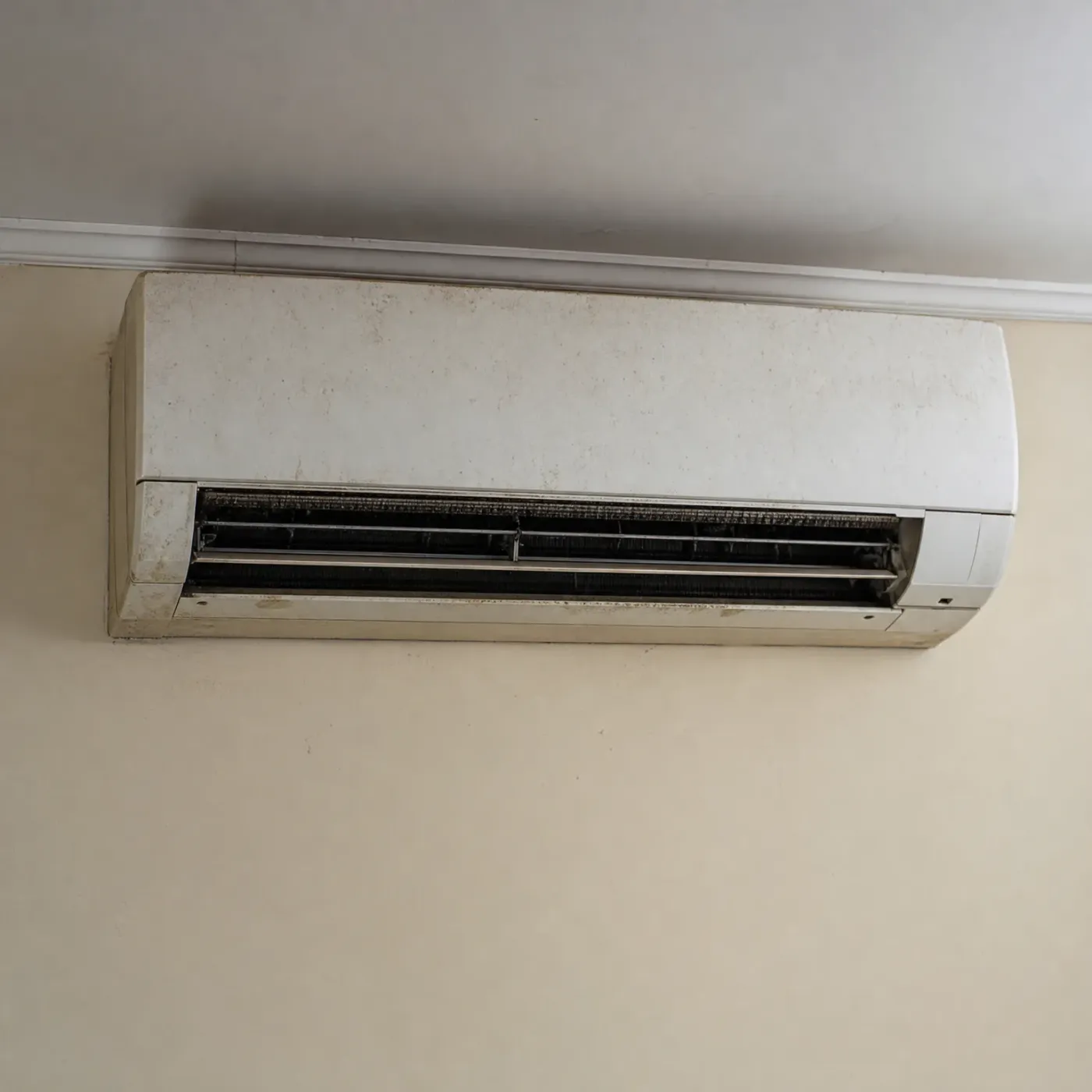
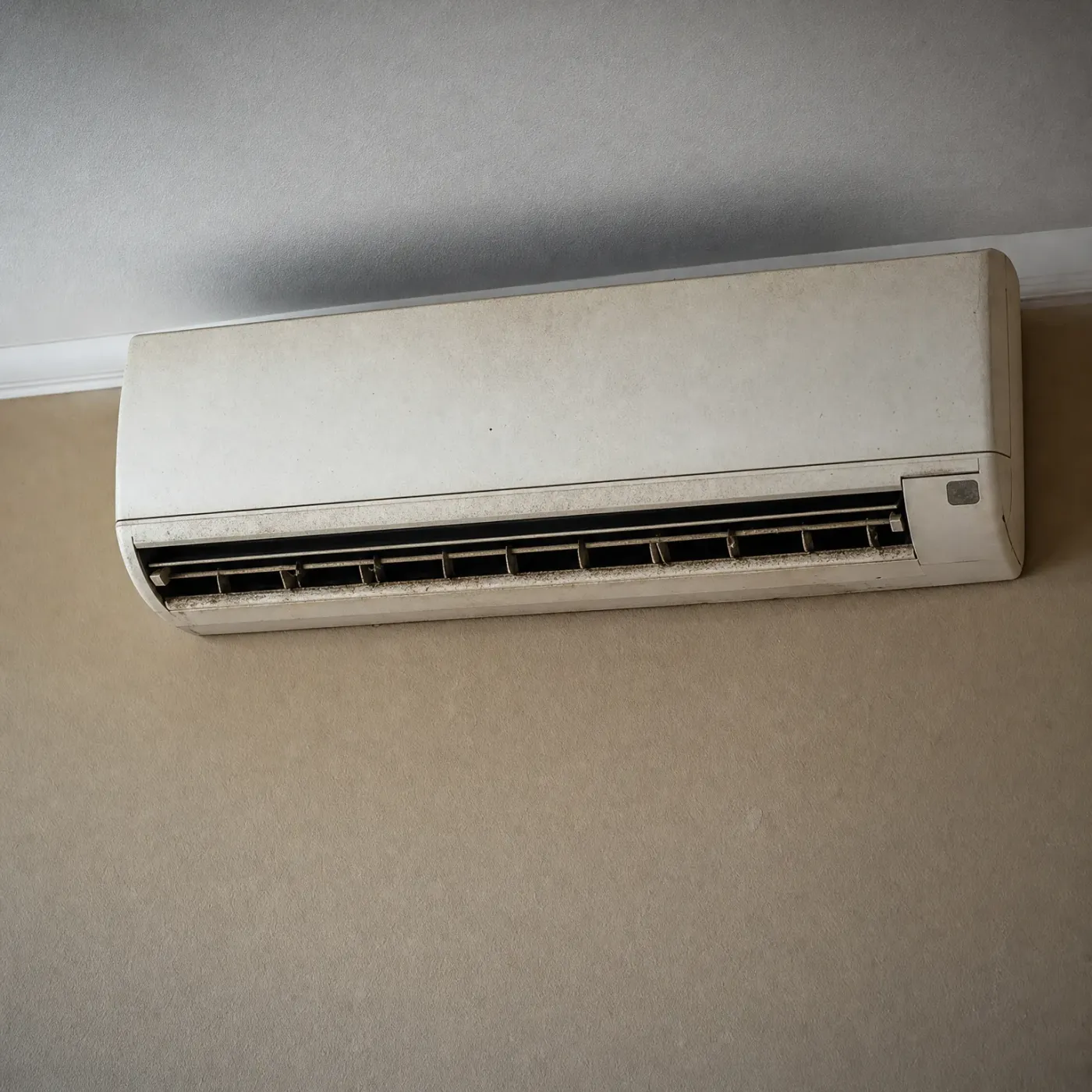
Discoloration and heavy dust like this usually mean the unit has been running long hours for a long time. If defrost cycles are getting longer or more frequent on a unit this worn, the coil or the sensor controlling defrost may be the reason.
You might notice the outdoor unit cycling into defrost every hour or so instead of a few times a day, or the indoor fan staying off longer each time before heat comes back. Some people catch ice building up on the bottom of the outdoor unit even after a defrost cycle finishes, or water pooling underneath it instead of draining away. Inside, the room takes longer to warm back up, and you might bump the thermostat up without thinking about why. Left alone through a Washington winter, a unit that can't fully clear its coil runs longer to make the same heat, and ice that keeps coming back usually means something underneath isn't shutting off defrost the way it should.
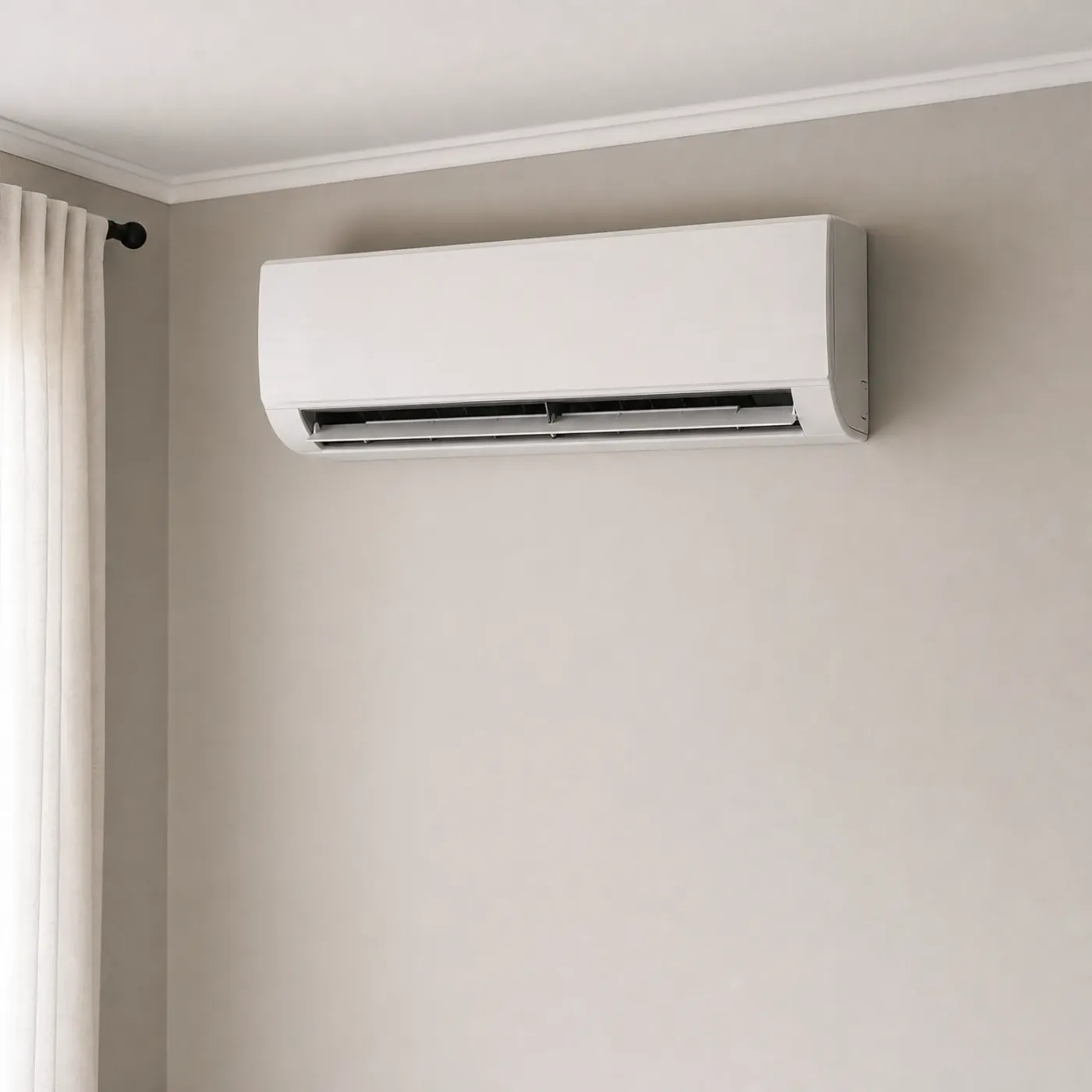
This is what a mini split looks like most of the winter. The cabinet is clean, the panel sits flush, and when it drops into defrost for a few minutes you might not even notice. It clears the coil and goes back to heating your room without any fuss.
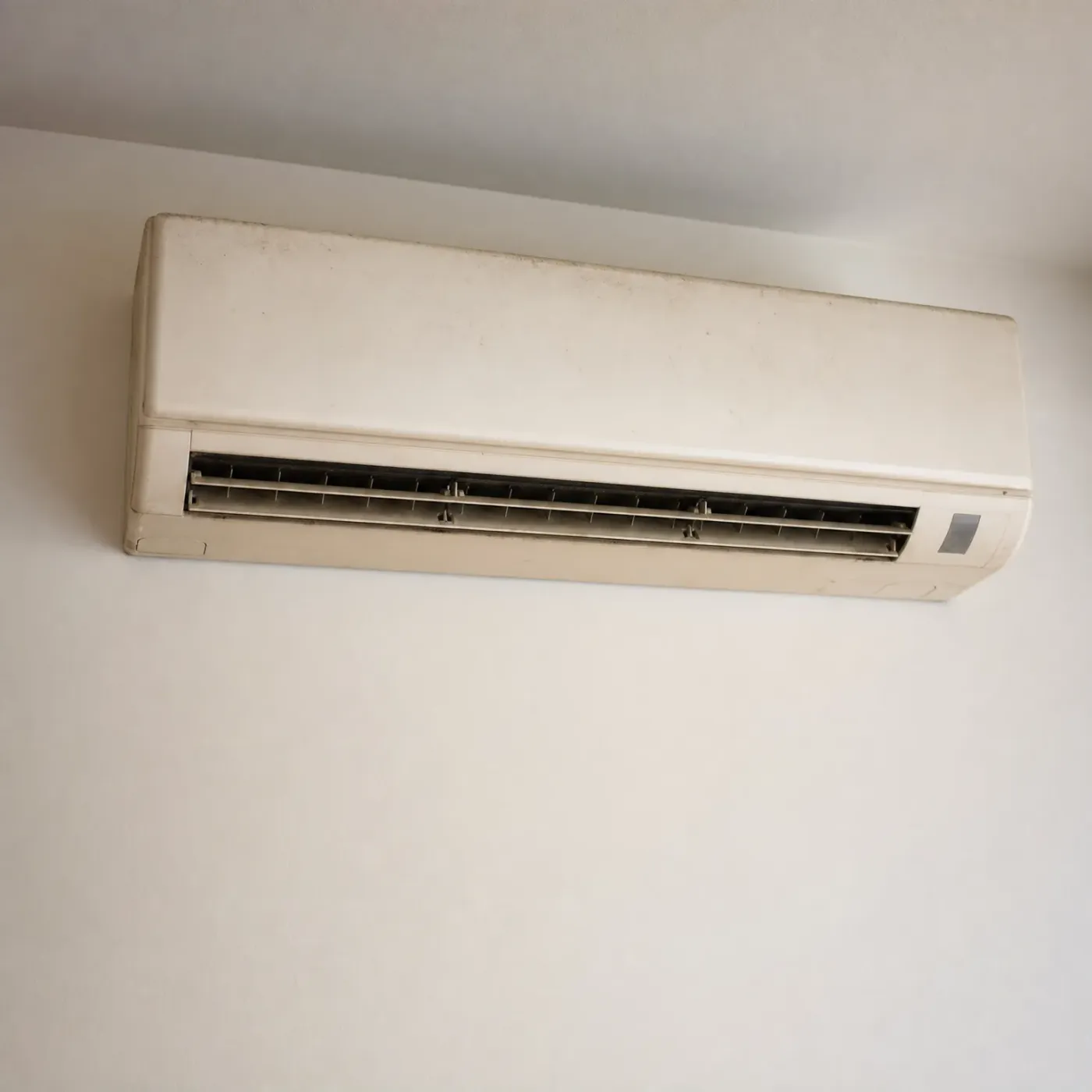
Years of defrost cycles add up if something's off. The casing yellows, dust builds up around the vents, and the unit starts looking its age. If yours has gotten here, a contractor who works on these year-round can tell you what's wearing out and what still has life left.




Only one pro gets your request, so you hear from one company.
Asking costs nothing, and the choice to hire stays yours.
A mini split heats your room by pulling heat out of the outside air, even when it's cold out, and moving it inside through the refrigerant line. The outdoor coil is where that heat gets collected, and in the process the coil itself can drop below freezing. Moist air hitting a cold coil forms frost, the same way your car windshield frosts on a cold, damp morning. A sensor mounted on the coil watches the temperature and triggers defrost once frost has built up enough to block airflow through the coil's fins. When that happens, the reversing valve switches direction, sending hot refrigerant gas out to the outdoor coil instead of the indoor one. For those few minutes the system is technically running backward, like an air conditioner, which is why the indoor unit stops putting out heat and the fan slows or shuts off entirely. The outdoor fan does the same, since blowing cold outside air across a coil that's trying to warm up would work against the whole point. On some models, a small heater at the base of the outdoor unit kicks on too, melting any ice that's dripped down and refrozen at the bottom. Once the coil sensor reads clear, the valve flips back, the outdoor fan resumes, and the system goes back to pulling heat from the air like before. The whole thing is automatic from start to finish. You don't set it, and there's nothing to turn on.



Summer dew point across Washington averages 53°F, based on readings over June, July and August. That's dry enough that your mini split barely works for it, which has nothing to do with the defrost cycle you'd see in winter. The two run on separate logic. Light, dry summer air means the outdoor coil doesn't build the kind of load that stresses a system, so if something's off with heating season defrost, the cause is sitting in the unit itself, not the weather outside right now.
NASA POWER T2MDEW county cells weighted by homes
Some mini splits have a backup electric heater for the moments defrost is running and the room would otherwise cool off. In most Washington homes that backup almost never gets used, because defrost cycles are short and the outdoor temperature here doesn't sit low enough long enough to need it. If you notice your power bill jump during a cold snap, that backup heat is a more likely cause than the defrost cycle itself, which draws very little extra power on its own.
Once defrost ends, the outdoor coil should be bare metal again, maybe damp, with no frost left clinging to the fins. A contractor checking a unit after a defrost cycle is looking for exactly that. If frost is still packed into the coil when the system switches back to heating, the sensor or the reversing valve likely isn't doing its job all the way, and that's a repair worth calling in before a cold week finds the gap.
At 13.17 cents a kilowatt-hour, running a mini split heat strip during defrost barely moves your bill. A few short cycles a day cost you almost nothing. What's worth fixing is a system defrosting every hour, because that extra runtime is what adds up over a winter.
EIA-861 2025 statewide residential average
A mini split going into defrost a few times a day, for a few minutes at a time, is doing exactly what it's supposed to do. You don't need to watch for it or do anything when it happens. What's worth your attention is a system that drops into defrost every hour, takes longer each time to come back, or leaves ice on the outdoor coil instead of clearing it. That's the system telling you something underneath isn't right, and it's worth getting looked at before it turns into a bigger repair or a winter without heat. If you've gotten to that point, you don't have to track down who's qualified to work on it. A licensed contractor near you who services mini splits all winter, and knows which parts tend to fail when defrost runs long, gets matched to your job. Just one contractor, not a pile of calls to sort through. Send the request and let someone who knows this equipment take it from there.
It's off your list after this