Tell us about the job
Takes about a minute. No obligation.
A contractor sizing a mini-split here has one side of the equation to solve. Homes in Garfield County, WA have essentially no cooling season — no month of the year is warm enough to call for it. The compressor never starts on a cooling call, and the condenser fan never runs to shed summer heat. Every hour the system runs is a heating hour, which means the heating-side components carry the full load without rotation across seasons. A contractor who ignores that when selecting capacity and setting refrigerant charge is leaving the system undersized for the only job it will ever do.
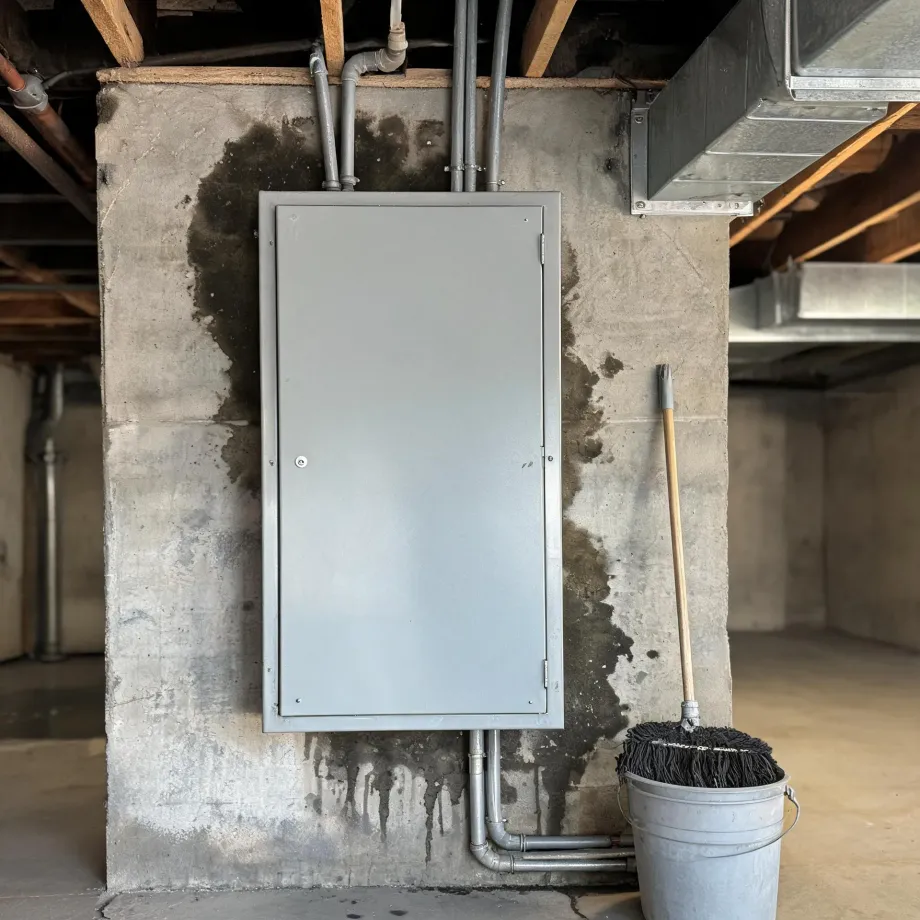
Electrical panels in this county's housing stock were sized for loads that had nothing to do with modern split systems, and many have not been touched since the house was built. Half the homes in Garfield County, Washington were built in 1957 or earlier (2020-2024 ACS 5-year). A mini-split draws on a dedicated circuit, and whether the existing service can support one without an upgrade is the first question a contractor answers, well before the outdoor unit gets placed or the line set gets run.
The Parts of a Mini-split System and What Gets Installed
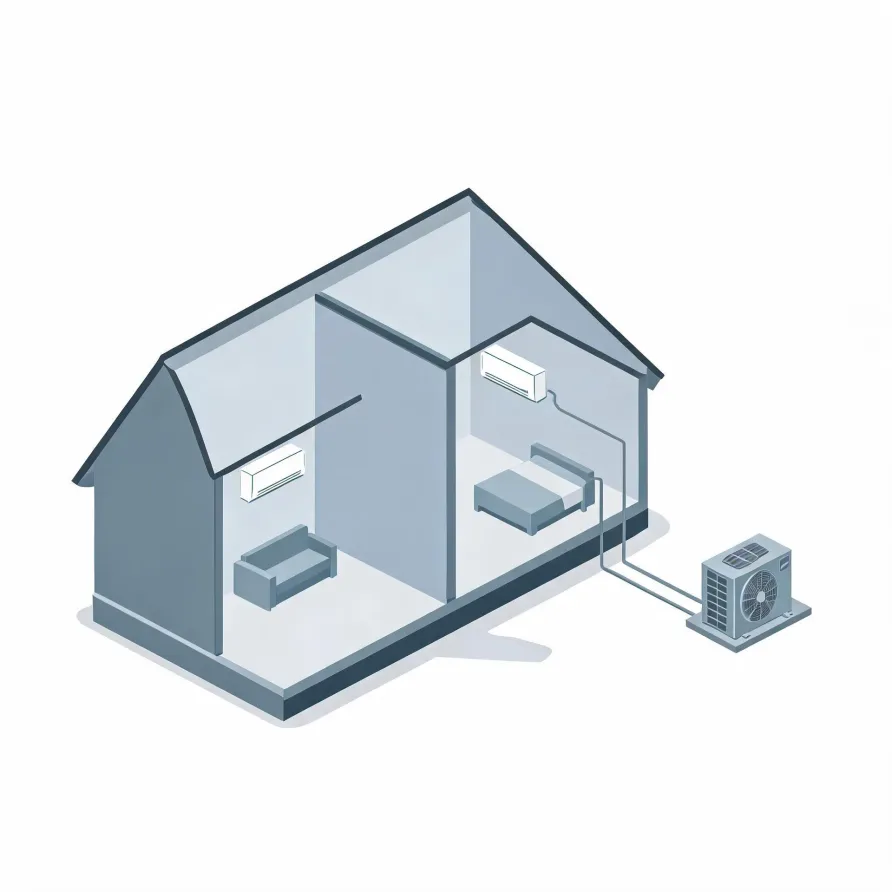
The indoor air handler mounts high on a wall inside the room you want conditioned. It draws room air across its coil and delivers treated air back into the space. The outdoor condenser unit sits outside the house, usually on a pad or bracket along an exterior wall, and houses the compressor and the components that do the heavy mechanical work.
A refrigerant line set runs through a small opening in the wall to connect the two units, carrying refrigerant between them. A condensate drain line runs from the indoor head to the outside, moving the moisture the air handler pulls from the air. A dedicated electrical circuit feeds the outdoor unit, with control wiring running alongside the line set to link both units.
The drawing shows the general layout of these components, and a licensed contractor determines exactly how each one applies to your house.
Find a contractor in Garfield CountyGarfield County, by the numbers
48 severe weather events were recorded in Garfield County, Washington between 2015 and 2024.
NOAA National Centers for Environmental Information, Storm Events Database, bulk CSV export, events 2015-01-01 through 2024-12-31.Half the homes in Garfield County, Washington were built in 1957 or earlier (2020-2024 ACS 5-year).
U.S. Census Bureau, 2020-2024 American Community Survey 5-Year EstimatesGarfield County, Washington holds 1,221 housing units (2020-2024 ACS 5-year).
U.S. Census Bureau, 2020-2024 American Community Survey 5-Year EstimatesOwners occupy 76.9% of the occupied homes in Garfield County, Washington (2020-2024 ACS 5-year).
U.S. Census Bureau, 2020-2024 American Community Survey 5-Year EstimatesCodes & Standards Governing Mini-Split Installation in Garfield County, Washington1 sourced rules and standards
Contractor Requirements in Garfield County, Washington
Washington requires contractor registration rather than an HVAC licence: every contractor must register with the Department of Labor and Industries, and advertising, bidding or working as a contractor without that registration is a gross misdemeanour.
Severe Weather Events in Garfield County
Heating and cooling loads are shaped by what the local climate actually does, not just its averages. A mini-split sized and installed for the conditions here handles demand that a generic spec might miss.
48 severe weather events, 2015–2024. Source: NOAA National Centers for Environmental Information, Storm Events Database.