Tell us about the job
Takes about a minute. No obligation.
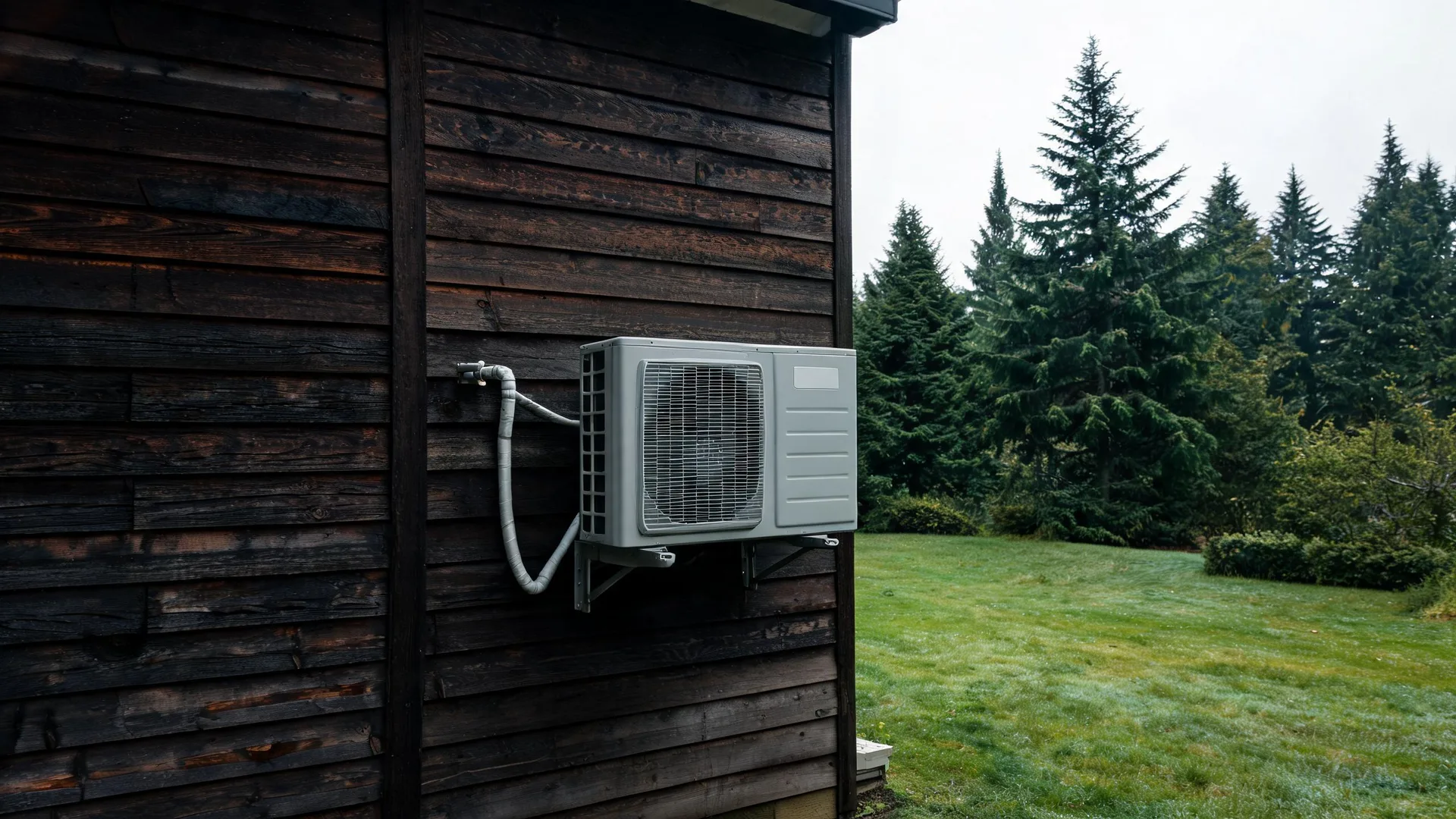
Sizing a mini-split here is a heating problem, not a cooling one. Homes in Snohomish County, WA have essentially no cooling season — no month of the year is warm enough to call for it. The compressor runs almost entirely in heating mode, which means the outdoor coil and the refrigerant circuit accumulate wear on the heating cycle rather than the cooling one. A unit undersized for those cold months strains the compressor on the coldest days, and a contractor has to establish the heating load before the equipment selection makes any sense. The cooling side of the spec can wait.
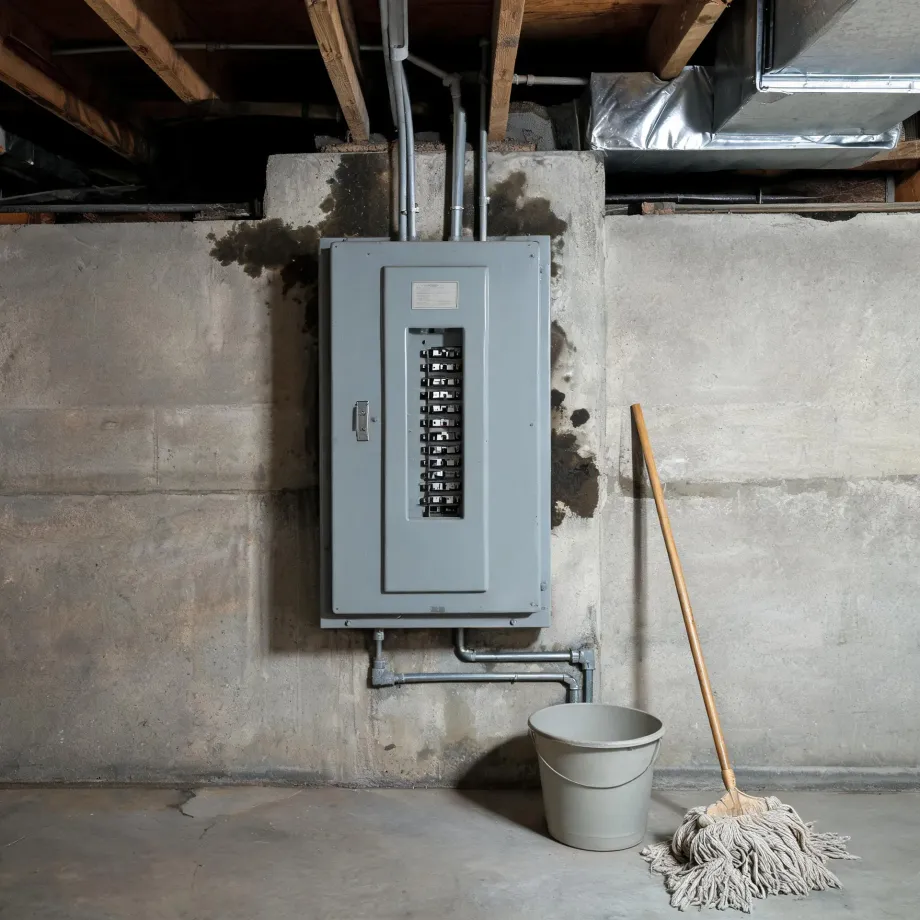
Electrical service is where most mini-split installs in this county get complicated. Half the homes in Snohomish County, Washington were built in 1990 or earlier (2020-2024 ACS 5-year). A house wired for equipment of that era was sized to a smaller load, and a mini-split condenser running on that same service panel often pushes against what the original installation was designed to handle. The ductwork question is secondary; the panel is what a contractor opens first and prices around.
The Parts of a Mini-split System and What Gets Installed
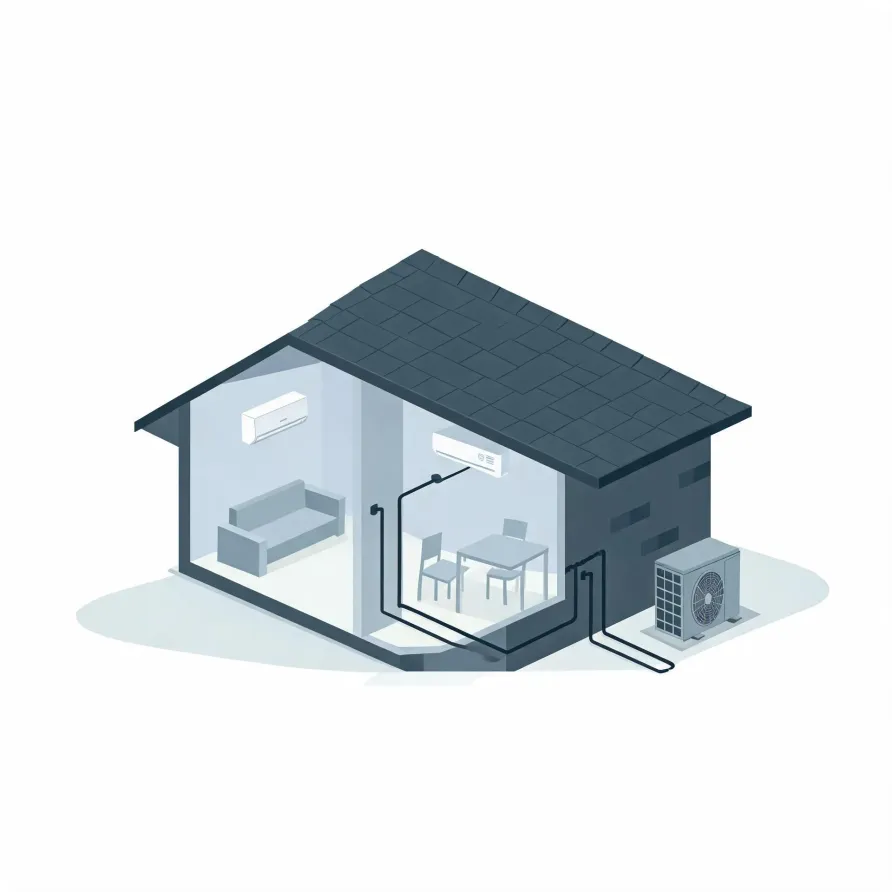
The indoor air handler mounts high on an interior wall, inside the room being conditioned. It is the piece a homeowner sees every day. The outdoor condenser unit sits on the ground or on a bracket outside the house, and it carries the compressor and the fan that move refrigerant through the system.
A conduit bundle connects the two units, running through a small hole in the wall to carry the refrigerant lines, the drain line, and the power cable between them. A dedicated disconnect box gets mounted on the exterior wall near the outdoor unit, giving the system its own shutoff point.
The drawing shows the general layout of these components, and a licensed contractor determines exactly how they are positioned and routed in your specific home.
Find a contractor in Snohomish CountySnohomish County by the numbers
Half the homes in Snohomish County, Washington were built in 1990 or earlier (2020-2024 ACS 5-year).
U.S. Census Bureau, 2020-2024 American Community Survey 5-Year EstimatesSnohomish County, Washington holds 331,530 housing units (2020-2024 ACS 5-year).
U.S. Census Bureau, 2020-2024 American Community Survey 5-Year EstimatesOwners occupy 68.2% of the occupied homes in Snohomish County, Washington (2020-2024 ACS 5-year).
U.S. Census Bureau, 2020-2024 American Community Survey 5-Year EstimatesRules & Standards for Mini-Split Installation in Snohomish County, Washington1 sourced rules and standards
Licensing and Legal Requirements in Snohomish County, Washington
Washington requires contractor registration rather than an HVAC licence: every contractor must register with the Department of Labor and Industries, and advertising, bidding or working as a contractor without that registration is a gross misdemeanour.